Why outdoor lights have different prices is a common question for B2B buyers comparing quotations from different suppliers. Two outdoor lights may look almost identical in product photos, yet their prices can vary significantly because of differences in materials, LED drivers, IP protection, quality control, and delivery terms.
Understanding why outdoor lights have different prices helps importers, wholesalers, distributors, and project buyers make fair comparisons. A lower quotation does not always mean lower quality, and a higher price does not automatically guarantee better performance. The key is to compare equivalent specifications and commercial conditions before placing an order.
1. Confirm Whether You Are Comparing the Same Product Specifications
Before asking why outdoor lights have different prices, check whether the two suppliers are actually quoting the same product.
A similar appearance does not guarantee identical specifications. Small differences in dimensions, wattage, light output, materials, and installation methods can affect manufacturing costs.
When comparing quotations, confirm these details:
- Product dimensions: Housing size, mounting dimensions, and installation requirements.
- Power and light output: Rated wattage, lumen output, and lighting efficiency.
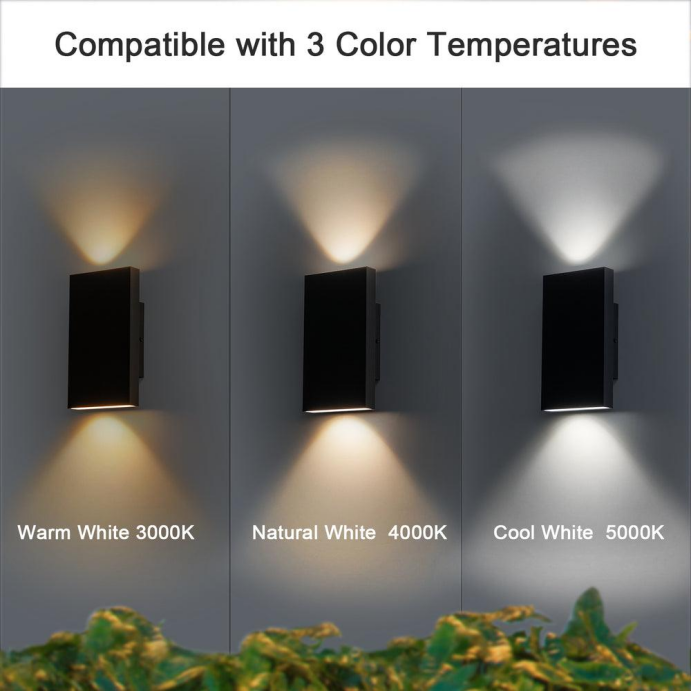
- Color temperature: For example, 3000K warm white, 4000K neutral white, or 6500K cool white.
- Light distribution: Beam angle, lens design, and glare-control requirements.
- Electrical specifications: Input voltage, driver type, and dimming compatibility.
- Product finish: Color, coating type, and surface texture.
For example, two outdoor wall lights may both be advertised as 12W products. However, their actual light output, driver configuration, and optical design may differ.
A quotation based only on wattage and appearance may therefore be misleading.
Buyer tip: Ask both suppliers to complete the same specification sheet before comparing unit prices. This helps you identify whether the price difference comes from product configuration or other factors.
2. Materials and Surface Treatment Affect the Cost
The housing material is another important reason why similar outdoor lights may have different prices.
Two products may share the same shape, but their housing materials and surface treatments can differ significantly.
Die-cast aluminum vs. plastic
Die-cast aluminum is commonly used in outdoor lighting because it offers a rigid housing and can help transfer heat away from internal components when the product is properly designed.
Plastic housings can be suitable for certain applications, but the material grade, UV resistance, wall thickness, and product design all influence long-term performance.
Neither material should be judged by appearance alone. The correct choice depends on the installation environment, performance requirements, and budget.
For a more detailed comparison, read our guide: Die-Cast Aluminum vs Plastic Outdoor Lights: Which Is Better?
Surface coating also matters
Even when two products use aluminum housings, their finishing processes may differ.
Check the following points:
- Coating type and thickness requirements
- Surface preparation before coating
- Coating adhesion and uniformity
- Corrosion resistance requirements
- Color consistency between production batches
For coastal projects or installations exposed to harsh weather, the required corrosion resistance may increase the cost.
However, a higher-priced coating is not automatically better for every project. Buyers should specify the expected environment and request relevant test information when necessary.
3. LED Drivers and LED Configurations Can Create Price Differences
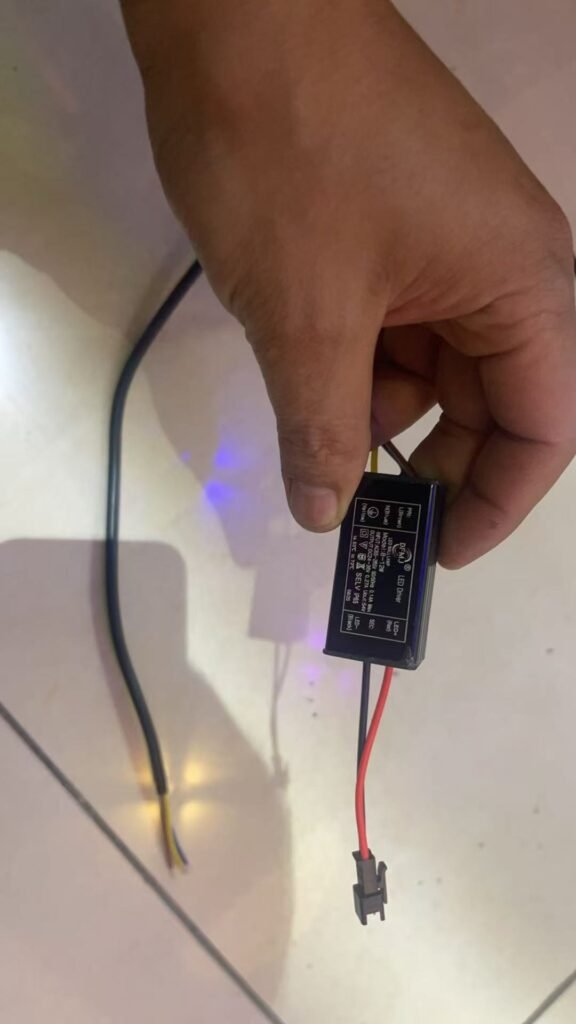
The LED driver is one of the components buyers should examine carefully when comparing outdoor lighting quotations.
The driver converts incoming electrical power into the form required by the LED system. Its specifications and compatibility can affect electrical performance, reliability, and the overall cost of the luminaire.
Two similar-looking outdoor lights may use different drivers, even if both products have the same rated wattage.
Compare these details:
- Driver manufacturer and model
- Input voltage range
- Output current and electrical compatibility
- Power factor and efficiency, where relevant
- Surge protection requirements
- Dimming functions, if required
- Warranty and available technical documentation
LED configurations also matter. Different LED packages, output targets, color consistency requirements, and optical designs can result in different costs.
For project buyers, the important question is not simply whether a supplier uses an expensive driver. It is whether the driver and LED configuration meet the project’s electrical, performance, and reliability requirements.
Buyer tip: Ask suppliers to identify the driver model or provide its datasheet when the driver specification is important to your project. If the supplier cannot disclose the exact brand, request the relevant electrical parameters and agreed performance requirements in writing.
4. IP Rating, Sealing Structure, and Testing Affect the Price
Outdoor lights must be designed for their intended installation environment. The level of protection required can influence both product design and manufacturing cost.
For example, an outdoor wall light installed under a covered entrance may face different exposure conditions from an inground light installed in a landscaped area.
When comparing prices, check:
- The required IP rating
- Gasket material and sealing design
- Cable entry and connector protection
- Screw and joint design
- Drainage or condensation-management provisions, where applicable
- Test methods and supporting test records
An IP rating describes protection against the ingress of solid objects and water under specified test conditions. It does not, by itself, guarantee resistance to corrosion, UV exposure, impact, or every outdoor environmental condition.
You can learn more in our guide: IP65 vs IP66 vs IP67: Which Outdoor Lighting Rating Do You Need?
Ask what was actually tested
A supplier may state that a product is IP65 rated, but buyers should clarify whether the claim applies to the exact model and configuration being purchased.
Where the project requires it, request relevant test reports or other supporting documentation. Confirm the model number, test scope, and applicable requirements rather than relying on a general statement about the product range.
Testing and quality-control requirements can affect the final quotation, especially when a project requires additional inspections or documentation.
For technical reference, buyers can consult the IEC 60529 standard for degrees of protection provided by enclosures. When evaluating an outdoor lighting product, confirm that any claimed IP rating and supporting test documentation apply to the specific model and configuration being purchased.
5. Packaging, MOQ, and Delivery Conditions Also Affect Unit Prices
Not every price difference comes from the lamp itself. Commercial conditions can make two quotations difficult to compare.
Minimum order quantity (MOQ)
A supplier quoting 1,000 units may offer a different unit price from one quoting 50 units.
Larger orders can spread certain setup, purchasing, and production costs across more units. Small orders may involve relatively higher handling and production costs per unit.
However, a lower unit price for a large order is only useful if the quantity matches your actual purchasing needs.
Packaging requirements
Standard packaging is not the same as customized packaging.
Costs may vary depending on whether you need:
- Individual retail boxes or standard export cartons
- Customized printing and labels
- Barcodes or customer SKU labels
- Protective inserts or special packaging materials
- Different packaging for mixed models
Lead time and delivery terms
The quotation should also clarify the production lead time, shipping arrangements, and delivery terms.
For example, a quotation that excludes freight cannot be compared directly with one that includes delivery to your warehouse. Payment terms, sample charges, inspection arrangements, and documentation requirements may also affect the total purchasing cost.
Buyer tip: Compare the total landed cost where possible, not just the factory unit price. Include product cost, packaging, freight, duties, inspection expenses, and other applicable charges.
6. Quality Control and After-Sales Support Can Explain Some Price Differences
Quality control is another factor that buyers should discuss with suppliers.
Different manufacturers may have different inspection procedures, testing equipment, acceptance criteria, and documentation practices.
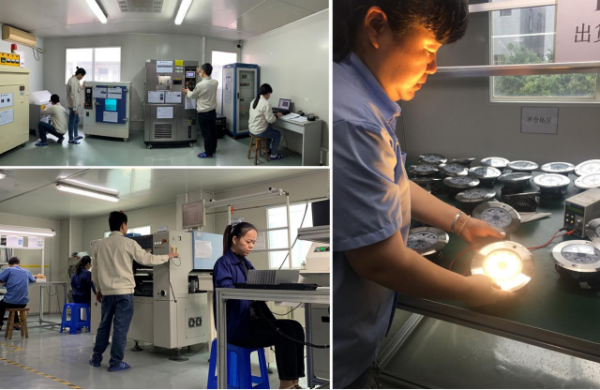
Ask each supplier to clarify the quality-control steps applicable to your order, such as:
- Incoming component inspection
- In-process production checks
- Electrical and functional testing
- Aging tests, where applicable
- Final inspection and sampling criteria
- Defect handling and warranty terms
These procedures may add costs, but they can also help buyers identify problems before shipment.
It is important to distinguish between a supplier’s stated process and evidence that the process is actually performed. Ask what records can be provided for your order and whether additional inspections are available.
A supplier offering a lower price may still meet your requirements. Equally, a higher price is not proof of better quality control.
For more information, read: Why Do Cheap Outdoor Lights Fail Early? 7 Problems Buyers Should Check
Why Outdoor Lights Have Different Prices: A Quick Comparison
When comparing why outdoor lights have different prices, B2B buyers should review the complete product specification rather than focusing only on appearance or wattage.
| Cost factor | What to compare |
|---|---|
| Housing material | Die-cast aluminum, plastic, or other specified materials |
| Surface treatment | Coating type, finish, and corrosion-resistance requirements |
| LED driver | Electrical parameters, driver model, and protection features |
| IP protection | Required rating, sealing design, and relevant test evidence |
| Quality control | Inspection procedures and test records |
| Order conditions | MOQ, packaging, lead time, and delivery terms |
This comparison helps explain why outdoor lights have different prices and identifies whether a quotation difference comes from product specifications or commercial terms.
7. How to Compare Outdoor Lighting Quotations Fairly
Once you understand the main cost factors, the next step is to compare quotations using a consistent set of requirements.
Use this checklist before making a purchasing decision.
| Comparison item | What to confirm |
|---|---|
| Product specification | Dimensions, wattage, lumen output, and model number |
| Housing material | Aluminum, plastic, or another specified material |
| Surface treatment | Coating type, color, and corrosion-resistance requirements |
| LED and driver | Electrical parameters, driver details, and dimming requirements |
| IP protection | Required rating and supporting test information |
| Quality control | Inspection procedures and applicable test records |
| MOQ | Minimum order quantity and price breaks |
| Packaging | Standard or customized packaging and labeling |
| Lead time | Production schedule and shipment readiness |
| Commercial terms | Payment, freight, warranty, and other included costs |
A practical example
Imagine two suppliers quote an outdoor wall light with a similar appearance.
Supplier A offers a lower price, while Supplier B offers a higher price.
Before choosing Supplier A, check whether both quotations include the same housing material, driver specification, IP rating, packaging, inspection requirements, and delivery terms.
If the specifications and conditions are genuinely equivalent, the price difference may reflect manufacturing efficiency, purchasing costs, overhead, or the supplier’s commercial margin.
If the specifications are different, the quotations are not directly comparable.
The correct decision is not automatically to select the cheapest or most expensive supplier. It is to determine which quotation meets your requirements at an acceptable total cost and risk level.
DFMJ Expert Insight: Compare Specifications Before Comparing Prices
For B2B outdoor lighting buyers, a quotation should be evaluated as a complete package rather than a single unit price.
At DFMJ Lighting, we recommend confirming the product configuration, material requirements, IP rating, electrical specifications, packaging, MOQ, and delivery conditions before placing an order.
For customized projects, document any agreed changes to the product, finish, accessories, or packaging. This reduces the risk of misunderstandings between quotation, sample approval, and mass production.
If you are comparing several suppliers, prepare one specification sheet and send the same requirements to each supplier. You can then identify genuine price differences more efficiently.
Explore our outdoor lighting products or contact DFMJ Lighting to discuss product specifications and requirements for your project.
Frequently Asked Questions
Why do two similar outdoor lights have different prices?
The difference may come from housing materials, surface treatment, LED drivers, LED configuration, sealing design, testing requirements, packaging, MOQ, or delivery conditions. Confirm that the specifications are equivalent before comparing prices.
Are more expensive outdoor lights always better?
No. A higher price does not automatically guarantee better quality. Buyers should compare documented specifications, test information, quality-control procedures, warranty terms, and total purchasing costs.
Why is one supplier’s outdoor lighting quotation much cheaper?
Possible reasons include different component specifications, materials, order quantities, packaging, quality-control requirements, overhead, or commercial margins. Ask the supplier to clarify the configuration and terms rather than assuming the reason.
What information should I send suppliers when requesting an outdoor lighting quotation?
Provide the product reference or drawing, required quantity, dimensions, wattage, color temperature, housing material, IP rating, finish, installation requirements, packaging needs, destination market, and target delivery date. Include any applicable certification or project documentation requirements.
How can I reduce outdoor lighting purchasing costs without sacrificing quality?
Start by defining the essential technical requirements. Compare equivalent products, review different order quantities, simplify unnecessary packaging customization, and discuss standard models with suppliers. Avoid removing important electrical, environmental, or quality requirements solely to achieve a lower unit price.
How do I compare outdoor lights with different prices?
To compare outdoor lights with different prices, request the same specification sheet from each supplier. Check the housing material, driver, LED configuration, IP rating, testing requirements, MOQ, packaging, lead time, and warranty terms before deciding which quotation offers the best value.
Final Takeaway
Why do outdoor lights have different prices? Because similar appearances do not necessarily mean identical products, performance, or purchasing conditions.
Before choosing a supplier, compare the specifications, materials, driver, sealing structure, testing, quality control, packaging, MOQ, and delivery terms.
A reliable purchasing decision starts with an accurate comparison—not simply the lowest quotation.
For outdoor lighting product information and B2B project inquiries, visit DFMJ Lighting.