Have you noticed your outdoor lights turning yellow after months or years of outdoor use?
When outdoor lights yellowing becomes visible, the problem is usually more than a cosmetic issue. A yellowed lens or diffuser can change the appearance of the fixture, reduce visual clarity, affect light distribution, and make an otherwise well-designed outdoor project look older than it should.
For homeowners, this can be frustrating. For wholesalers, distributors, contractors, and project buyers, premature yellowing can create customer complaints, warranty issues, and replacement costs.
So why do outdoor light covers turn yellow?
The answer often comes down to material selection, UV exposure, heat, product construction, and environmental conditions.
Understanding these factors can help B2B buyers choose outdoor lighting that maintains its appearance and performance for longer.
Why Are Outdoor Lights Yellowing?
When outdoor lights yellowing appears after prolonged outdoor use, UV radiation is often one of the first factors to investigate.
Outdoor fixtures are exposed to sunlight, temperature changes, humidity, rain, dust, and heat. Over time, these conditions can affect polymers and other transparent materials used for lenses, diffusers, and covers.
Common causes include:
- UV exposure
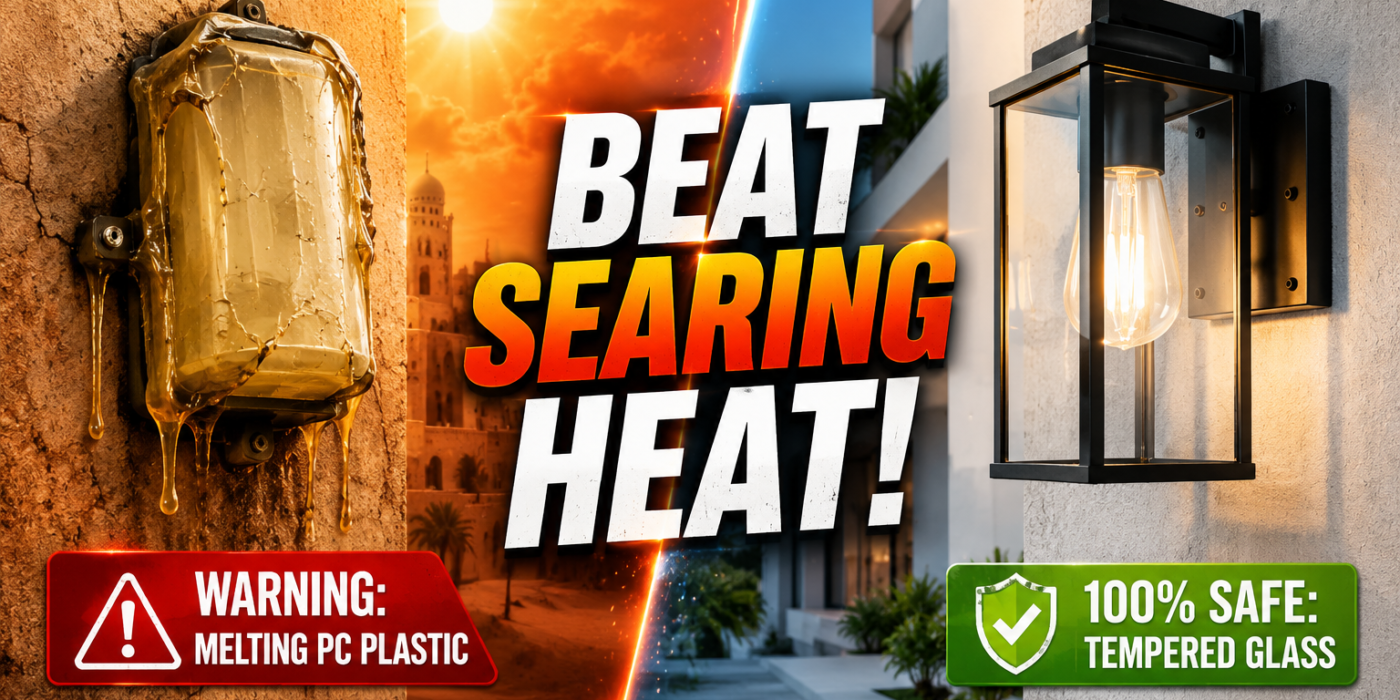
- Excessive heat
- Low-quality plastic materials
- Material aging
- Poor surface protection
- Chemical or environmental exposure
- Unsuitable material selection for the application
The important point is that not every transparent plastic performs the same way outdoors.
1. UV Exposure Can Cause Outdoor Lights to Turn Yellow
Ultraviolet radiation from sunlight can gradually affect some plastic materials.
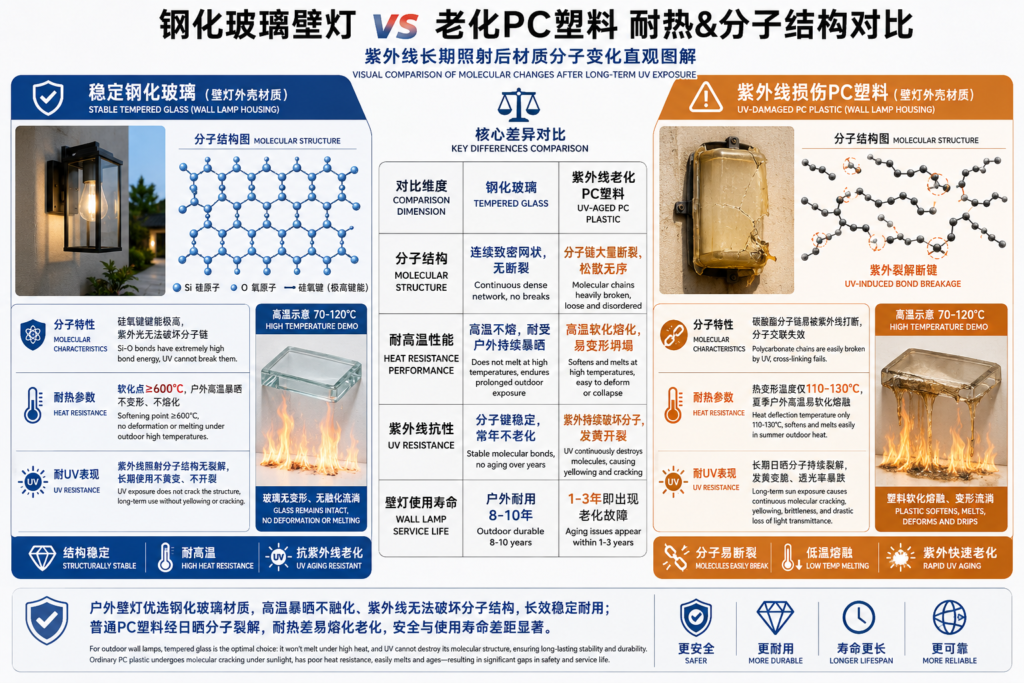
Long-term UV exposure may cause changes in the molecular structure of certain polymers. Depending on the material and formulation, this can lead to yellowing, reduced transparency, brittleness, or surface degradation.
This is one of the main reasons outdoor lights yellowing can become noticeable after extended outdoor exposure.
For outdoor lighting projects, buyers should therefore ask what material is used for the lens or diffuser and whether it is designed for outdoor UV exposure.
A material that performs well indoors may not provide the same long-term performance outdoors.
2. Heat Can Accelerate Material Aging
UV exposure is not the only factor.
Heat can also accelerate material aging.
Outdoor lighting fixtures may operate for many hours, while direct sunlight can further increase the temperature around the fixture. If the material is not suitable for the operating environment, prolonged heat exposure can contribute to discoloration or degradation.
This is why thermal design matters even when discussing an apparently simple issue such as yellowing.
A well-designed outdoor fixture should consider the relationship between:
Light source + heat + housing + lens material + environment
rather than treating each component separately.
3. Material Choice Makes a Major Difference
One of the most important questions when outdoor lights yellowing occurs is:
What is the lens or diffuser made from?
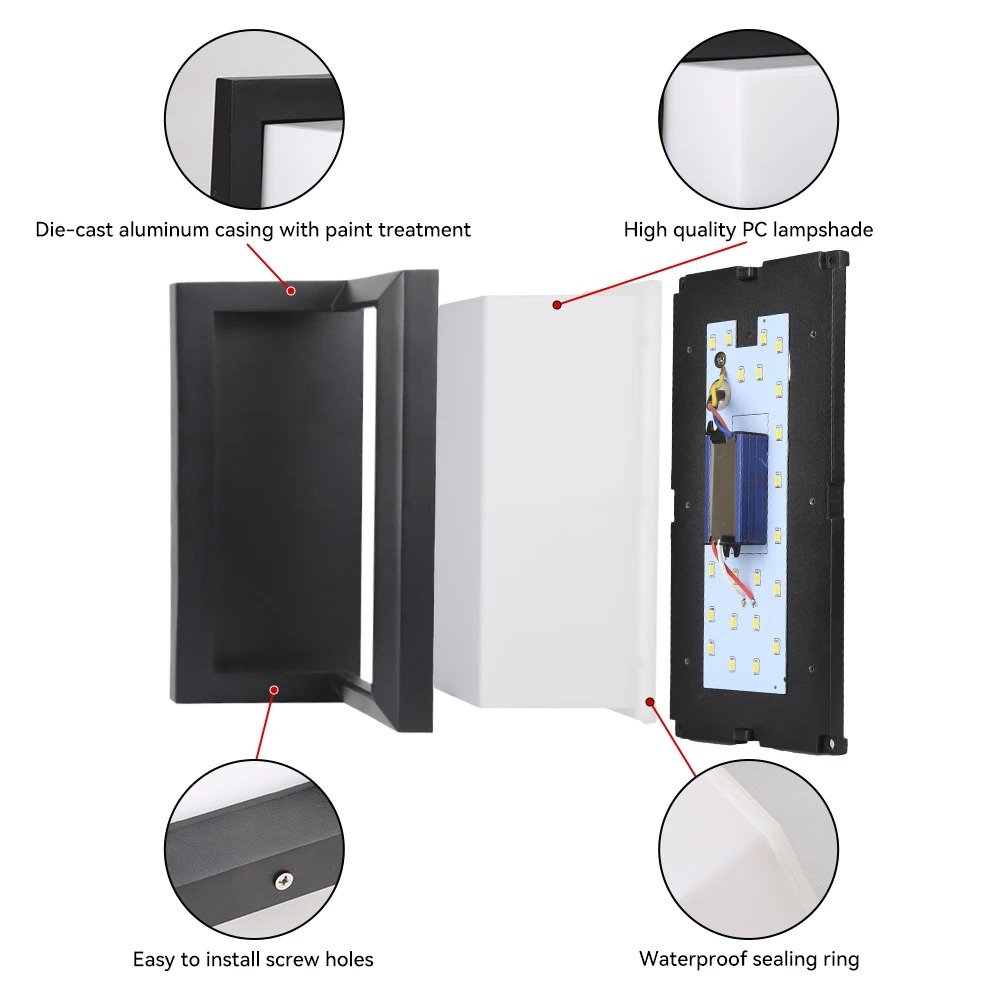
Common materials used in outdoor lighting include acrylic, polycarbonate, glass, and other engineered polymers.
Their optical properties, impact resistance, UV performance, heat resistance, and long-term appearance can vary significantly.
For B2B buyers, the cheapest transparent material is not necessarily the most economical choice.
If a diffuser becomes yellow and needs to be replaced after a relatively short period, the total cost may become much higher than choosing a more suitable material from the beginning.
4. Polycarbonate and Acrylic Are Not Automatically the Same
Polycarbonate and acrylic are both widely used in lighting, but they have different performance characteristics.
Polycarbonate is known for its impact resistance and is widely used where mechanical strength is important. However, its outdoor UV performance depends heavily on the specific grade, formulation, and UV stabilization.
Acrylic can provide excellent optical clarity and is commonly used in lighting applications, but its performance also depends on the exact material and application.
Therefore, simply saying “PC” or “acrylic” does not tell a buyer everything they need to know.
For B2B purchasing, it is better to ask about the specific material grade, UV resistance, application conditions, and testing.
5. Glass Can Be a Different Option
Glass is another material used for outdoor lighting covers.
Compared with some plastics, glass can provide strong resistance to UV-related discoloration and excellent optical stability.
However, glass also has different characteristics, including weight, impact behavior, processing requirements, and design considerations.
That means the decision should not simply be:
Glass is better than plastic.
Instead, the right material depends on the project.
For a commercial landscape project, a contractor may prioritize impact resistance. For an architectural project, optical clarity and long-term appearance may be more important.
DFMJ Expert Insight: Material Selection Is Part of Product Design
At DFMJ Lighting, we believe the material of a lens or diffuser should be selected according to the actual application rather than simply based on cost.
When developing outdoor lighting, we consider factors such as:
UV exposure + operating temperature + optical performance + mechanical requirements + outdoor environment
This is particularly important for products that will be installed in locations with strong sunlight or high temperatures.
A transparent component may look excellent when the product leaves the factory, but the real question for a B2B buyer is:
How will it look after years of outdoor exposure?
That is why material selection should be discussed before mass production, especially for projects where appearance and consistency are important.
For more background on the differences between glass and plastic lighting covers, see our related guide on tempered glass vs plastic for outdoor lighting.
Real Project Tip: Test Materials Before a Large Order
If you are a distributor, contractor, or project buyer concerned about outdoor lights yellowing, do not evaluate a lens only by looking at a new sample.
A new product can look almost identical to another product when both are fresh from the factory.
The difference may only become visible after extended exposure.
Before placing a large order, ask your supplier about:
- Lens or diffuser material
- UV resistance
- Operating temperature
- Outdoor application conditions
- Material grade
- Relevant test reports
- Expected long-term appearance
If your project is located in a region with strong sunlight, high temperatures, or long outdoor operating hours, communicate these conditions to the manufacturer.
For larger projects, material testing or sample evaluation can help reduce the risk of unexpected discoloration later.
How to Prevent Outdoor Lights Yellowing
If you want to reduce the risk of outdoor lights yellowing, start with the material rather than waiting for discoloration to appear.
A practical approach is to:
- Choose materials designed for outdoor use
- Consider UV exposure before selecting the lens
- Check the material grade rather than only the material name
- Consider operating temperature
- Evaluate the fixture’s thermal design
- Request relevant material or product testing information
- Test samples under conditions similar to the final application
Most importantly, don’t choose an outdoor light only by comparing unit prices.
The real cost includes product life, appearance, maintenance, replacement, installation, and customer satisfaction.
How DFMJ Lighting Approaches Outdoor Lighting Materials
At DFMJ Lighting, outdoor lighting is designed with the real installation environment in mind.
Our product range includes outdoor wall lights, garden lights, bollard lights, step lights, façade lighting, and other exterior lighting products.
For B2B buyers, material selection is part of the product discussion.
Depending on the project, we can evaluate requirements such as:
- Outdoor exposure
- UV conditions
- Temperature
- Desired light appearance
- Mechanical requirements
- Installation environment
- Project quantity
This helps buyers move from simply asking for “a cheap outdoor light” to specifying a product that is appropriate for the actual project.
Explore the DFMJ Lighting Outdoor Wall Lights collection if you are sourcing exterior wall lighting for residential or commercial projects.
FAQ: Outdoor Lights Yellowing
Why do outdoor lights turn yellow?
Outdoor lights can turn yellow because of long-term UV exposure, heat, material aging, chemical exposure, or the use of materials that are not well suited to outdoor conditions.
Does polycarbonate turn yellow outdoors?
Polycarbonate can experience UV-related degradation if the specific material is not adequately stabilized or protected. Outdoor performance depends on the grade, formulation, UV protection, and environmental conditions.
Is acrylic better than polycarbonate for outdoor lights?
Neither material is automatically better for every application. Acrylic can provide excellent optical clarity, while polycarbonate is known for impact resistance. The appropriate choice depends on the project’s environmental and performance requirements.
Does glass prevent outdoor lights from yellowing?
Glass generally has strong resistance to UV-related discoloration, but it also has different weight and impact characteristics compared with plastic. The best material depends on the application.
How can I prevent outdoor lights from turning yellow?
Choose an appropriate outdoor-grade material, consider UV exposure and operating temperature, verify the material specification, and test samples before placing a large order.
About DFMJ Lighting
DFMJ Lighting is a China-based outdoor lighting manufacturer serving wholesalers, distributors, contractors, and project buyers.
Our product range covers outdoor wall lights, garden lighting, bollard lights, step lights, façade lighting, and other exterior lighting solutions.
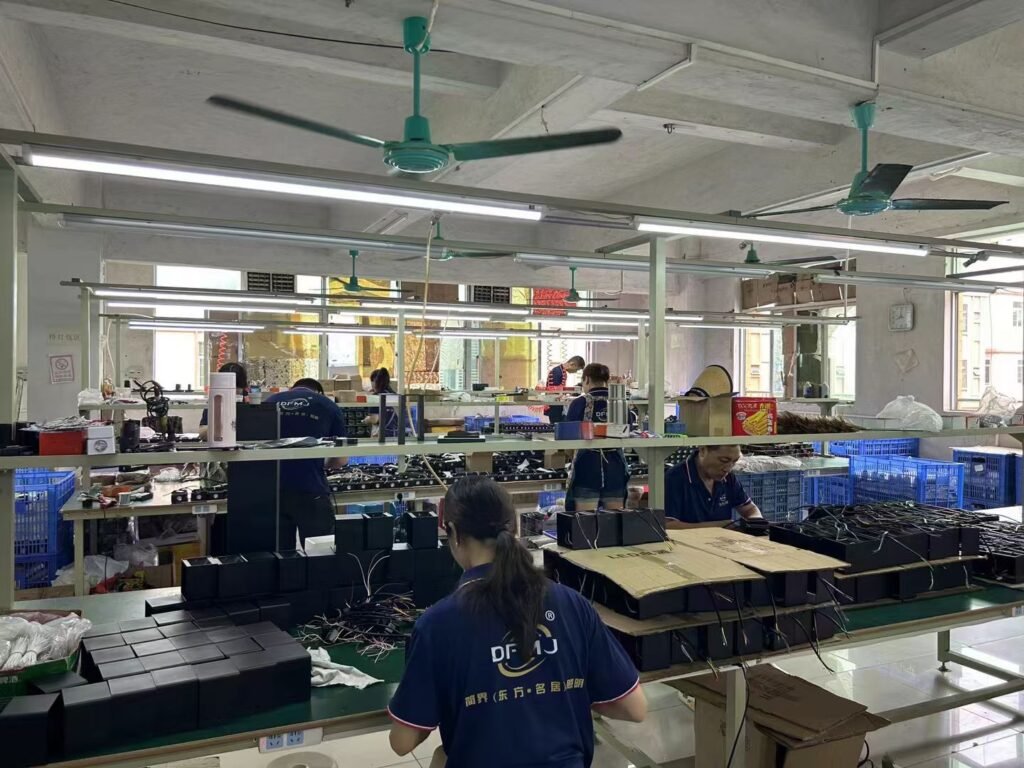
With manufacturing experience in outdoor lighting, DFMJ Lighting focuses on practical product construction, material selection, waterproof protection, and project-specific requirements.
For B2B buyers, our goal is not simply to provide an outdoor fixture at a competitive price.
We aim to help customers select products that are appropriate for the environment, application, performance requirements, and project budget.
Need Outdoor Lighting Designed for Your Project?
If your outdoor lights yellowing problem is affecting an existing project, replacing the fixture may only solve the visible symptom.
The better approach is to identify the underlying cause and evaluate the material, UV exposure, heat, and product construction.
If you are sourcing outdoor lighting for a villa, hotel, commercial building, landscape project, or distribution business, contact DFMJ Lighting to discuss your requirements.
Contact DFMJ Lighting for outdoor lighting solutions
Related Articles
Outdoor Lights Keep Failing? 7 Causes and How to Prevent It
Outdoor Lights Get Water Inside? 7 Causes and Fixes
Outdoor Lights Too Bright? Causes, Fixes & Better Lighting
Why Do Outdoor Lights Trip After Rain? Causes, Fixes, and How to Prevent Water Damage