How do you compare outdoor lighting suppliers fairly when several companies offer similar products at different prices?
For importers, wholesalers, distributors, and project buyers, choosing a supplier involves more than comparing unit prices. Two suppliers may offer outdoor lights with similar appearances, but their materials, LED drivers, IP protection, quality-control procedures, and delivery conditions may be different.
To compare outdoor lighting suppliers effectively, you need to use the same product specifications, review the evidence behind each quotation, and evaluate the risks associated with samples, mass production, and delivery.
This guide provides eight practical checks and a supplier comparison table you can use when evaluating quotations for outdoor lighting projects.
1. Compare Outdoor Lighting Suppliers Using the Same Specifications
Before comparing prices, make sure every supplier is quoting the same product configuration.
If one supplier quotes a basic model and another quotes a model with upgraded components, the price difference may be justified. Without a common specification sheet, it is difficult to determine which quotation offers better value.
Confirm the following details before requesting quotations:
- Product dimensions: Overall size, mounting dimensions, and installation requirements.
- Electrical specifications: Rated wattage, input voltage, and driver configuration.
- Light output: Lumen output, color temperature, and beam angle.
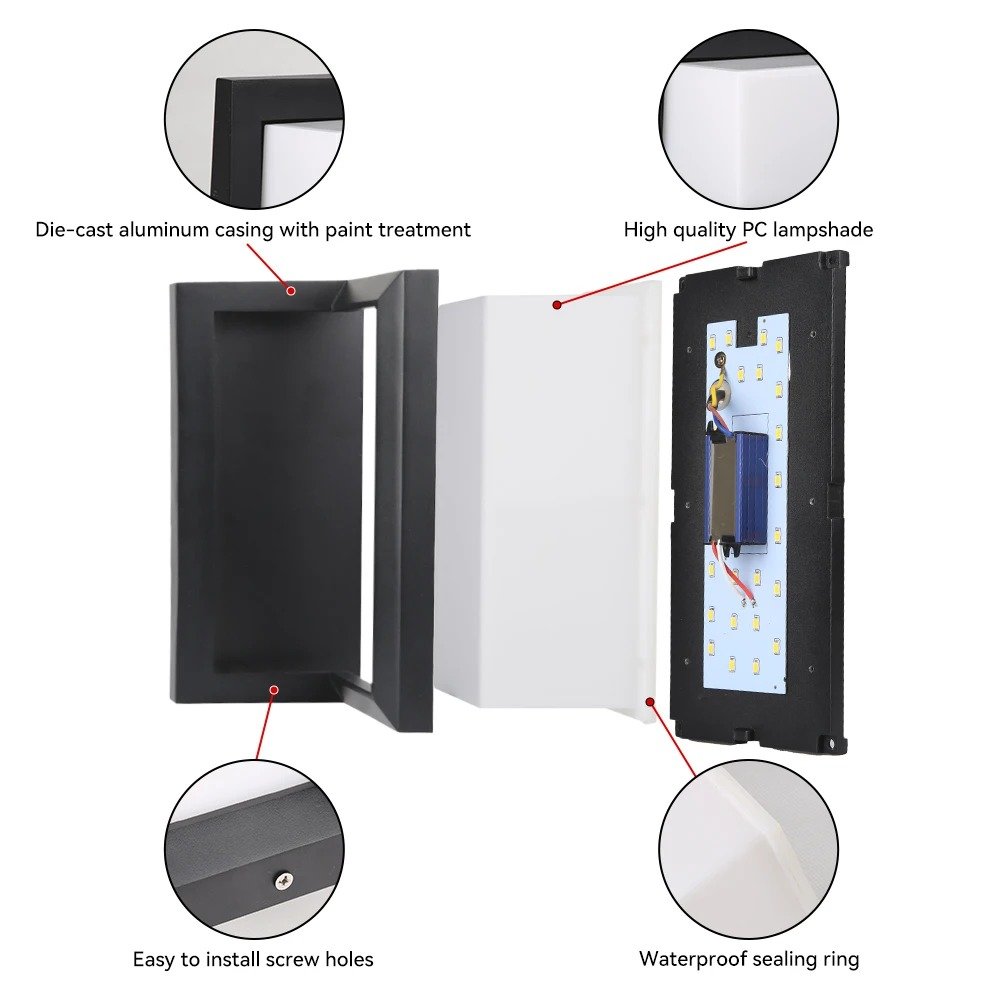
- Housing material: Die-cast aluminum, plastic, or another specified material.
- Surface finish: Color, coating requirements, and corrosion resistance.
- IP rating: Required protection against dust and water ingress.
- Accessories: Mounting brackets, screws, connectors, and other included parts.
- Packaging: Standard cartons, customized boxes, labels, and barcodes.
For example, if three suppliers quote an outdoor wall light, ask all three to quote the same wattage, color temperature, housing material, IP rating, and packaging requirements.
Buyer tip: Create one specification sheet and send it to every supplier. Ask each company to identify any deviations instead of assuming that all quoted products are identical.
2. Compare Materials, LED Drivers, IP Ratings, and Testing
A product photo cannot tell you everything about an outdoor light. Technical specifications and supporting documentation help you understand what you are actually purchasing.
Housing materials and surface treatment
Check whether the suppliers use the same housing material and finishing requirements.
Die-cast aluminum and plastic have different characteristics, costs, and suitable applications. The performance of each product also depends on material grade, design, manufacturing quality, and environmental conditions.
Read our related guide: Die-Cast Aluminum vs Plastic Outdoor Lights: Which Is Better?
LED drivers and electrical components
Ask suppliers to provide relevant driver specifications, such as input voltage, output current, power factor, efficiency, and surge protection where required.
If a specific driver brand or model is essential to your project, state that requirement in the quotation request. Otherwise, compare the agreed electrical parameters and performance requirements rather than relying on general descriptions such as “high-quality driver.”
IP rating and sealing design
Confirm the required IP rating and whether the claim applies to the exact model being quoted.
A higher IP rating is not automatically necessary for every application. The appropriate rating depends on the installation environment and project requirements.
You can review the differences in our guide: IP65 vs IP66 vs IP67: Which Outdoor Lighting Rating Do You Need?
For technical reference, consult the IEC 60529 standard for degrees of protection provided by enclosures. Request relevant test documentation when the project requires it, and confirm that the documents apply to the quoted model and configuration.
What should you compare?
| Technical factor | Questions to ask |
|---|---|
| Housing material | Is the material specified clearly? |
| Surface finish | Are the finish and environmental requirements agreed? |
| LED driver | Are the electrical parameters and model confirmed? |
| LED configuration | Are output and color requirements consistent? |
| IP rating | Is the required rating supported by relevant evidence? |
| Testing | Which tests are performed, and what records are available? |
Do not assume that a supplier offering more technical documents automatically provides a better product. Check whether the evidence is relevant to your actual requirements.
3. Check Whether Samples Match Mass Production
A sample helps you evaluate a product before committing to a larger order. However, approving a sample does not automatically guarantee that every mass-produced unit will be identical.
When comparing outdoor lighting suppliers, ask how each supplier manages the transition from sample approval to mass production.
Check these points:
- Is the approved sample identified by model number and specification?
- Are the housing material, finish, driver, and LED configuration documented?
- Are customized details recorded in writing?
- What production inspections are performed?
- How are defects or specification deviations handled?
- Can the supplier provide inspection records for the order?
For customized products, keep an approved sample or clear reference records wherever practical. Document any agreed changes before production begins.
For example, if you approve a sample with black screws, a specific color temperature, and a customized label, those requirements should appear in the final order specification.
Buyer tip: Do not rely only on verbal promises that mass production will be “the same as the sample.” Record the agreed specifications and acceptance criteria in the purchase order or an approved technical document.
4. Compare MOQ, Lead Time, and Communication Efficiency
A supplier’s unit price is only one part of the purchasing decision. Minimum order quantity, production scheduling, and communication can affect the total cost and practicality of working together.
Minimum order quantity
Ask each supplier to quote the quantities relevant to your business.
For example, request prices for 100, 500, and 1,000 units if these quantities reflect your expected purchasing range.
Compare the price breaks, but also check whether the supplier requires different packaging, payment terms, or production arrangements at each quantity.
A lower unit price at a very high MOQ may not be suitable if your business cannot sell the stock quickly.
Production lead time
Confirm the estimated production lead time, when it begins, and whether the quoted schedule depends on sample approval, deposit receipt, or confirmation of customized details.
Also clarify whether the quotation includes only production or covers delivery to the destination.
Communication efficiency
Communication is especially important when an order involves technical details, customized packaging, or several product models.
Observe whether the supplier:
- Answers specification questions clearly.
- Identifies missing information before quoting.
- Confirms changes in writing.
- Explains lead-time assumptions.
- Provides realistic updates when schedules change.
A fast response alone does not prove that a supplier is reliable. The quality and accuracy of the information matter more than response speed alone.
5. Review Supplier Documents and Quality-Control Procedures
Documents can help you verify a supplier’s claims and reduce misunderstandings before placing an order.
However, the documents you need depend on the product, destination market, and project requirements. Do not assume that every certificate or test report is mandatory for every order.
Depending on the project, request relevant items such as:
- Product datasheets and technical drawings
- Applicable test reports
- Relevant declarations or conformity documents
- Driver and component specifications
- Quality-control procedures
- Sample inspection records
- Warranty terms
- Packaging specifications and product labels
When reviewing documents, check the product model, issuing organization, document date, scope, and applicable requirements.
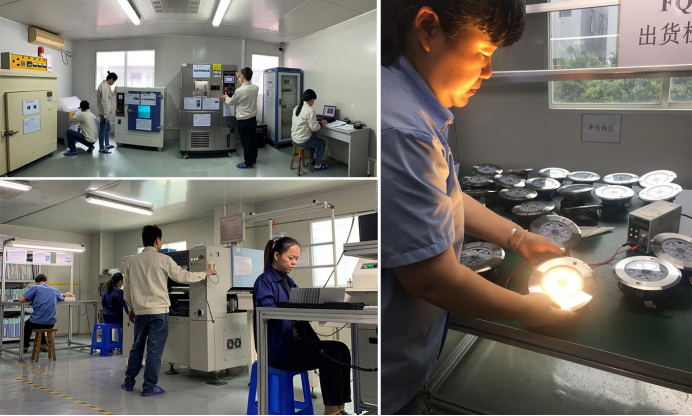
Ask the supplier to explain the inspection process used for your order. This may include incoming component checks, in-process inspections, electrical tests, aging tests where applicable, and final inspection.
The key is to establish what the supplier actually does and what evidence can be provided—not simply to count the number of documents received.
For a broader supplier assessment, read our guide: How to Evaluate an Outdoor Lighting Supplier: 9 Things B2B Buyers Should Check
6. Compare Total Purchasing Cost, Not Just Unit Price
When you compare outdoor lighting suppliers, a lower factory price does not necessarily mean a lower total purchasing cost.
One quotation may include customized packaging, while another may exclude it. One may include inspection services, while another may charge extra. Freight and other destination-related expenses can also differ.
Compare the following costs where applicable:
- Product unit price
- Sample and customization charges
- Packaging and labeling
- Inspection expenses
- Freight and insurance
- Import duties and applicable taxes
- Payment-related charges
- Expected costs associated with defects, replacements, or delays
Example: Why the cheapest quotation may not be the best option
Imagine that Supplier A offers a lower unit price than Supplier B.
However, Supplier A’s quotation excludes customized packaging and additional inspection. Supplier B includes both in the quoted price.
Without checking the full terms, you cannot determine which offer is more economical for your business.
This does not mean Supplier B is automatically the better choice. Ask both suppliers to quote the same scope, then compare the total cost and any remaining differences.
Buyer tip: Request an itemized quotation when the scope is unclear. Make sure the product specifications, quantity, packaging, delivery terms, and other included services are consistent.
7. Use This Outdoor Lighting Supplier Comparison Table
The following template can help you compare three suppliers using one consistent set of criteria.
Copy the table into Excel or Google Sheets and fill in the details based on quotations, technical documents, sample inspections, and supplier responses.
| Evaluation item | Supplier A | Supplier B | Supplier C |
|---|---|---|---|
| Product model | |||
| Specifications confirmed | |||
| Housing material | |||
| Surface finish | |||
| LED driver details | |||
| IP rating and evidence | |||
| Testing information | |||
| Sample approved | |||
| Mass-production QC | |||
| MOQ | |||
| Unit price | |||
| Packaging included | |||
| Production lead time | |||
| Delivery terms | |||
| Required documents | |||
| Warranty terms | |||
| Communication and follow-up | |||
| Estimated total cost | |||
| Outstanding risks |
How to use the comparison table
Step 1: Standardize the requirements. Send the same specification sheet and quantity requirements to every supplier.
Step 2: Record evidence, not assumptions. If a driver model, test report, or production lead time has not been confirmed, mark it as “Pending” rather than guessing.
Step 3: Identify differences. Separate differences in technical specifications from differences in commercial terms.
Step 4: Resolve important questions. Ask suppliers to clarify missing documents, specification deviations, or unclear delivery conditions before making a final decision.
Step 5: Select according to your priorities. Consider technical suitability, total cost, production capability, communication, and order risk together.
If your business mainly serves distributors, stock availability, repeat-order consistency, and practical MOQ may be particularly important. If you are buying for a construction project, technical compliance, installation requirements, documentation, and delivery scheduling may carry more weight.
There is no single supplier scoring system that works for every buyer. Your evaluation criteria should reflect your business model and the requirements of the order.
8. Make the Final Decision Based on Evidence and Business Fit
After completing the comparison table, you should be able to explain why one supplier is more suitable than another.
Before confirming the order, make sure you can answer these questions:
- Does the quoted product meet the required specifications?
- Are important technical claims supported by relevant documentation?
- Has the sample been approved, and are the agreed details recorded?
- Can the supplier meet the required quantity and delivery schedule?
- Are pricing, packaging, payment, and delivery terms clear?
- Are quality-control procedures and warranty responsibilities documented?
- Have the major uncertainties and potential risks been addressed?
A supplier does not need to be the cheapest to be commercially suitable. Equally, a higher quotation should not be accepted without understanding what additional value or service it provides.
The objective is to select a supplier whose product, commercial terms, and capabilities fit your business requirements.
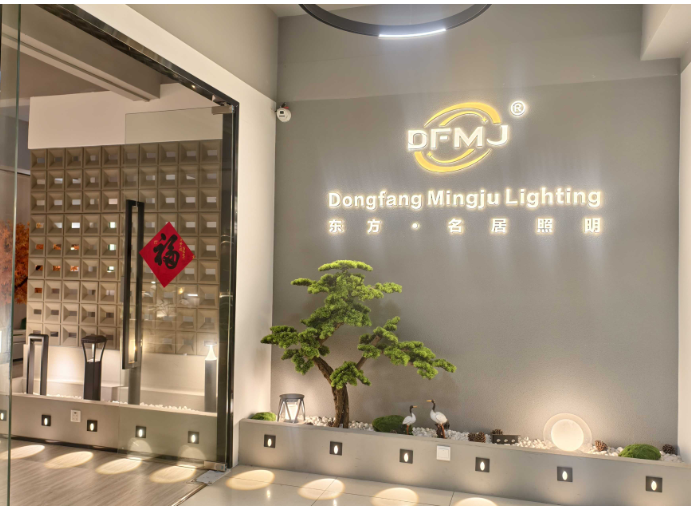
DFMJ Expert Insight: Make Supplier Comparisons Easier Before Ordering
For B2B outdoor lighting buyers, the most effective comparison process starts before the quotations arrive.
At DFMJ Lighting, we recommend preparing a clear product specification sheet, defining the required quantity and packaging, and identifying any technical documents needed for your market or project.
When requesting quotations, ask suppliers to state any deviations from your requirements. This makes it easier to compare offers and reduces the risk of discovering important differences after placing an order.
If you are sourcing outdoor wall lights, garden lights, step lights, or other outdoor lighting products, you can explore the DFMJ Lighting website or contact us to discuss your product requirements.
Frequently Asked Questions
How do I compare outdoor lighting suppliers fairly?
To compare outdoor lighting suppliers fairly, send the same specifications and order conditions to each supplier. Evaluate materials, drivers, IP rating, testing, samples, quality control, MOQ, lead time, documentation, and total purchasing cost.
Should I always choose the supplier with the lowest price?
No. The lowest price may be suitable if the product and commercial conditions meet your requirements. Before deciding, confirm that the quotation includes the same specifications, packaging, testing, and delivery scope as competing offers.
What should I check before approving an outdoor lighting sample?
Check dimensions, materials, finish, light output, color temperature, electrical configuration, IP-related requirements, accessories, and packaging where applicable. Record the approved specifications and clarify how deviations will be handled during mass production.
How can I check whether an outdoor lighting supplier is reliable?
Review relevant product documentation, quality-control procedures, sample consistency, communication, production scheduling, and the supplier’s ability to meet your requirements. Where possible, verify important claims using supporting records rather than relying only on sales statements.
What is the most important factor when comparing outdoor lighting suppliers?
There is no single factor that matters most for every order. Product suitability and required compliance are essential, while total cost, production consistency, MOQ, delivery, and communication should be evaluated according to your business and project needs.
Final Takeaway
To compare outdoor lighting suppliers effectively, start with identical specifications, verify technical details, check sample-to-production controls, review documents, and compare the full purchasing cost.
Use a structured comparison table to record confirmed information, identify missing evidence, and resolve differences before placing your order.
A fair supplier comparison is not about finding the lowest quotation. It is about finding the supplier that best meets your technical, commercial, and operational requirements.