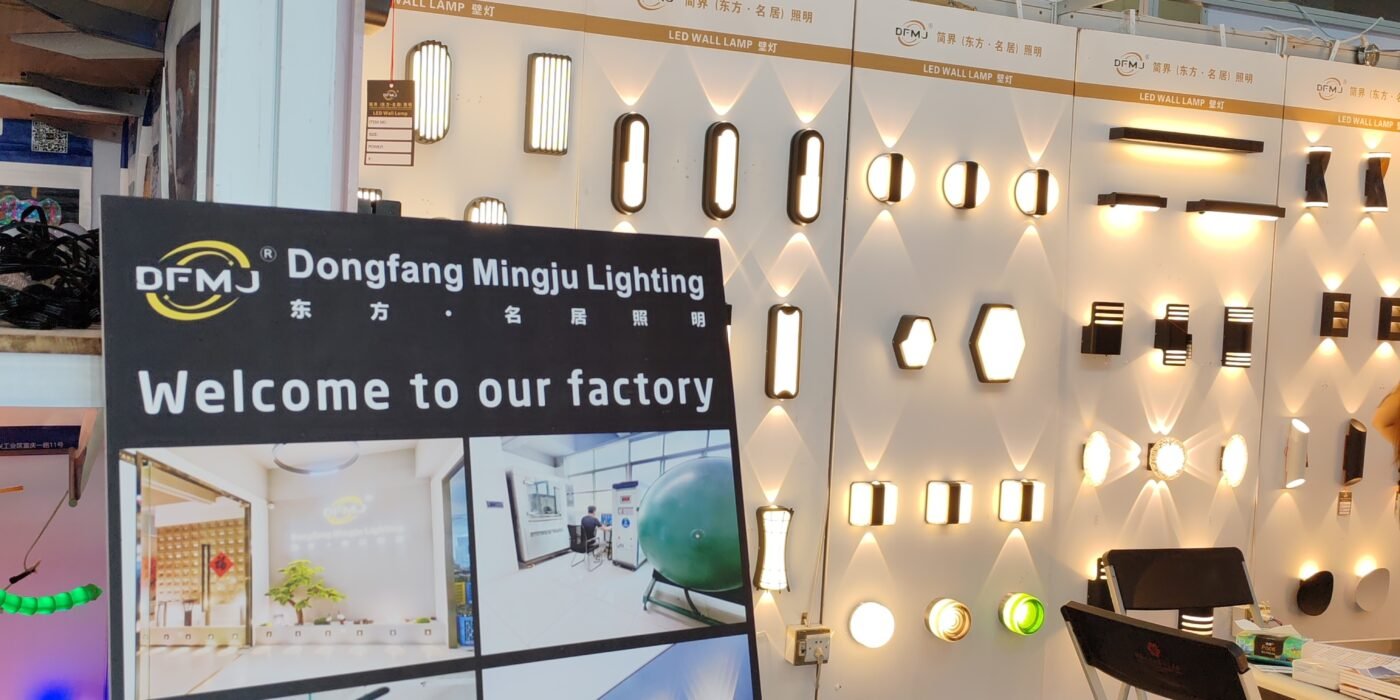

How to evaluate an outdoor lighting supplier is an important question for distributors, wholesalers, contractors and project buyers before placing a new order.
An outdoor light may look good in a catalogue, but a successful B2B purchase involves much more than appearance and unit price.
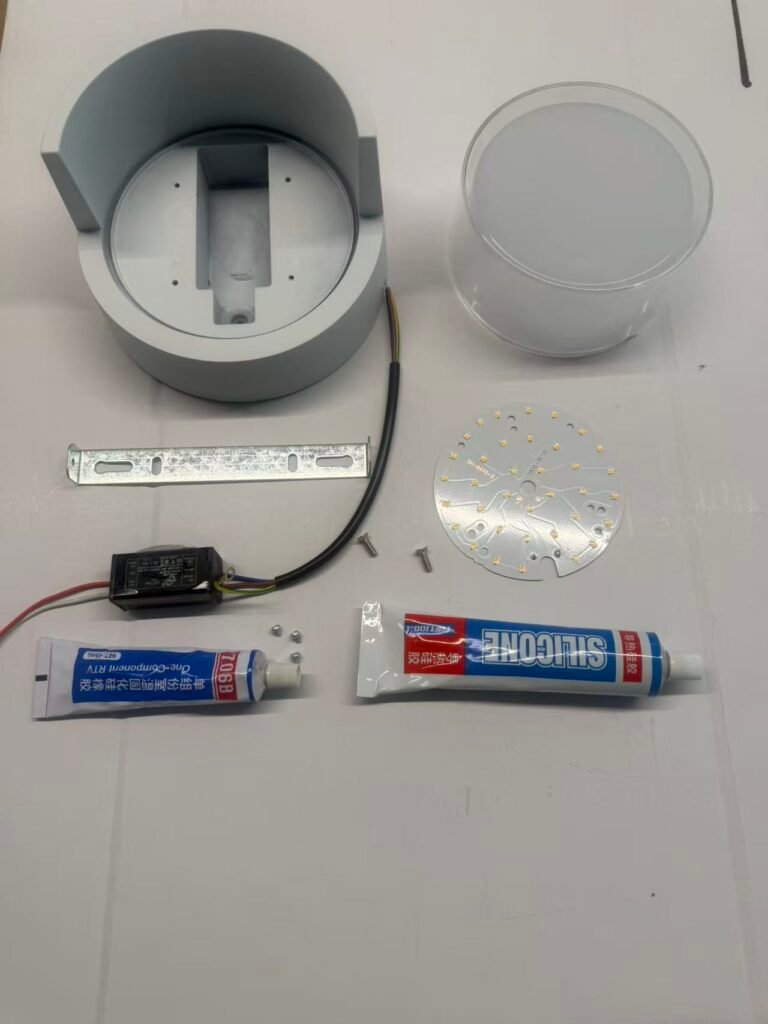
Buyers should look at the product specification, materials, waterproof protection, electrical components, surface treatment, quality control, MOQ, lead time and the supplier’s ability to support future orders.
This is especially important when sourcing outdoor lighting for hotels, villas, commercial buildings, gardens, walkways or other outdoor projects.
In this guide, we will explain 9 practical things B2B buyers should check before choosing an outdoor lighting supplier.
Quick Answer: How to Evaluate an Outdoor Lighting Supplier
When evaluating an outdoor lighting supplier, check these nine areas:
- Product range and specialization
- Housing and material quality
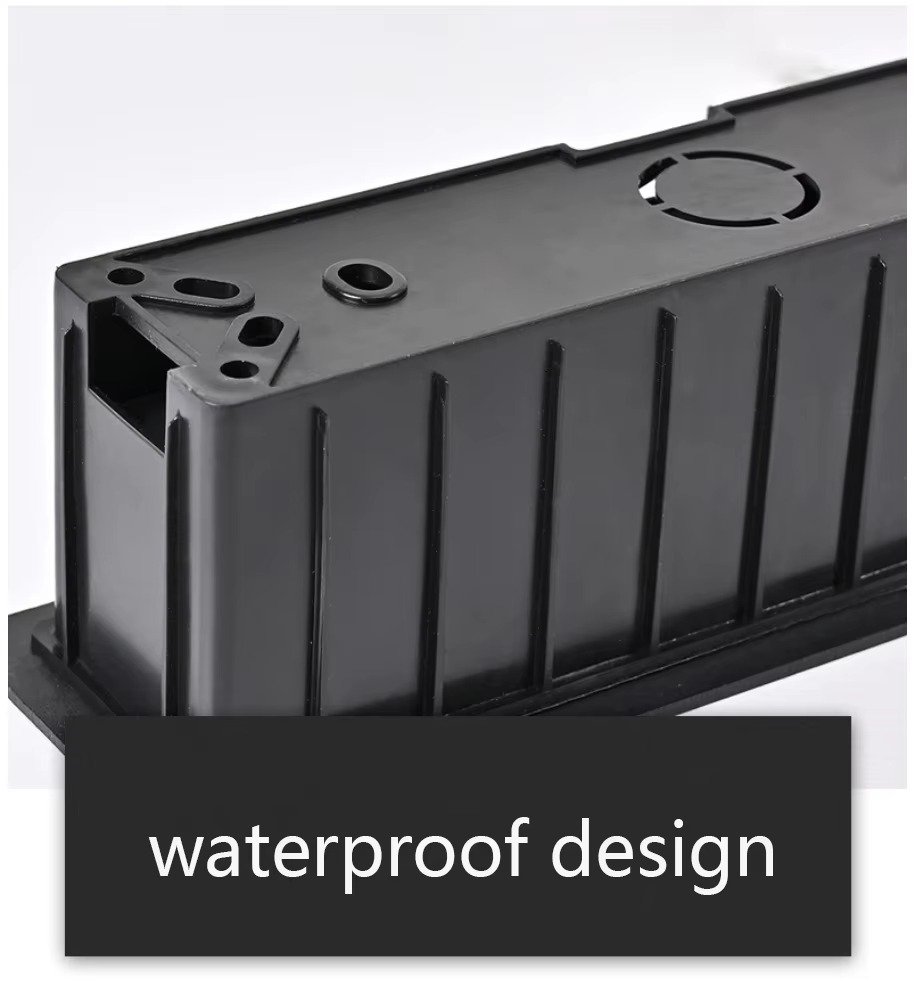
- IP rating and waterproof testing
- LED driver and electrical components
- Surface treatment and corrosion resistance
- MOQ, pricing and lead time
- OEM/ODM capability
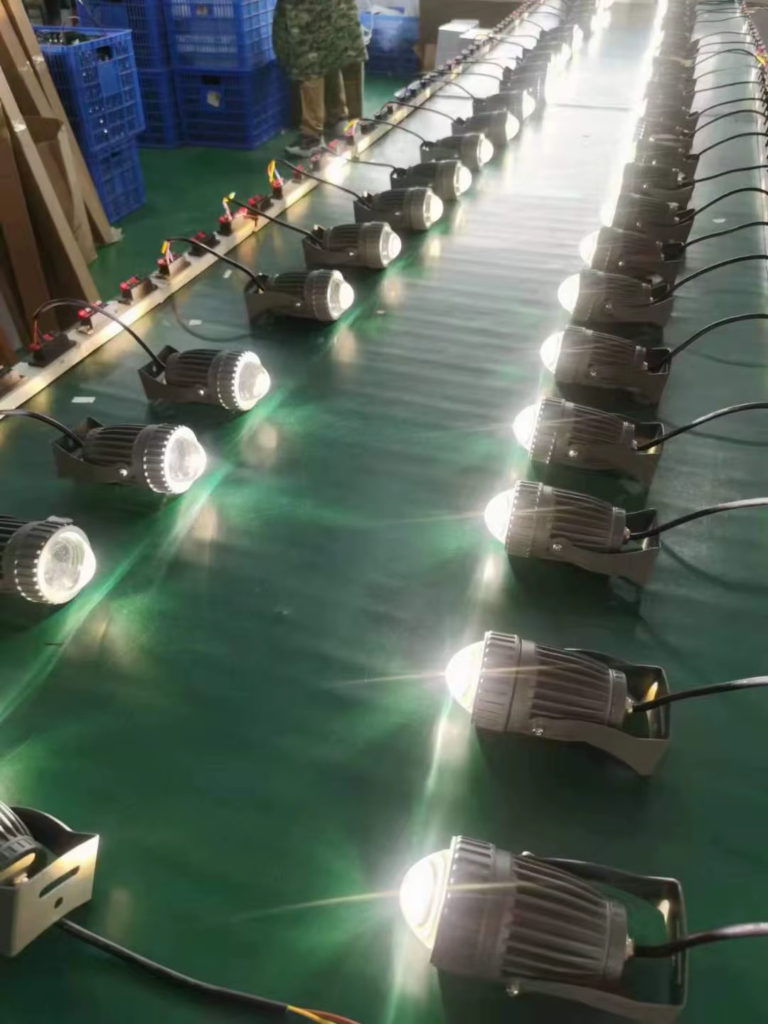
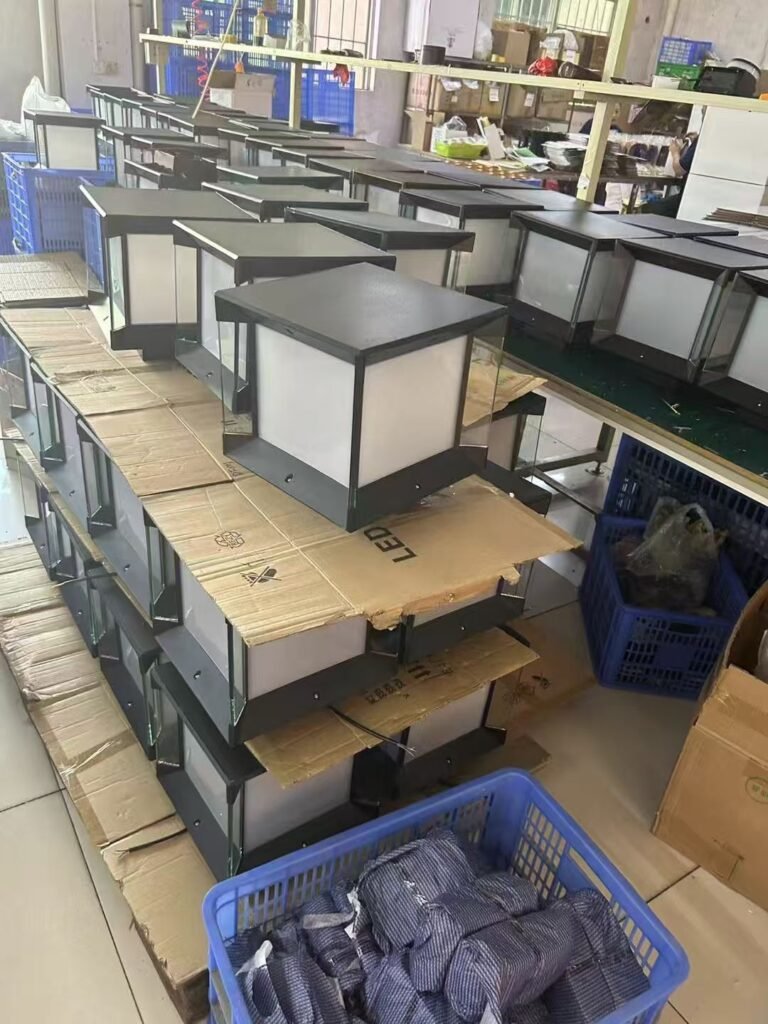
- Quality control and production capability
- Samples and long-term consistency
The goal is not simply to find the lowest quotation.
The goal is to find a supplier whose product quality, specifications, production capability and commercial terms match your market and project requirements.
1. Check the Supplier’s Outdoor Lighting Product Range
The first step in learning how to evaluate an outdoor lighting supplier is to understand what the supplier actually specializes in.
Some companies offer a very large range of lighting products but manufacture only a small part of them.
Others specialize in outdoor lighting and have more experience with specific applications.
For B2B buyers, look at whether the supplier has products relevant to your market, such as:
- Outdoor wall lights
- Garden lights
- Landscape lights
- Bollard lights
- Outdoor step lights
- Inground lights
- Facade lighting
Also check whether the supplier can provide different designs, sizes, finishes and specifications.
A supplier with a product range close to your business can make future product development and sourcing easier.
2. Check the Housing and Material Quality
The housing material directly affects the construction, appearance and long-term performance of an outdoor light.
Common materials include die-cast aluminum, stainless steel, PC and other plastics.
For aluminum outdoor lights, don’t only ask:
“Is it aluminum?”
Ask more specific questions:
- What type of housing is used?
- How is the housing finished?
- What is the coating process?
- Is the surface suitable for outdoor exposure?
- How are the housing and diffuser assembled?
- Are the mounting components suitable for the application?
Die-cast aluminum can provide a rigid housing and good heat transfer characteristics, but material choice should always be considered together with the product design and application.
For plastic components, UV resistance and material suitability can be particularly important in locations with strong sunlight and high temperatures.
This is why material evaluation should be part of your outdoor lighting supplier checklist.
3. Check the IP Rating and Waterproof Testing
For outdoor lighting, waterproof protection is one of the specifications that should be verified before ordering.
The IP Code is defined by IEC 60529, which classifies degrees of protection provided by enclosures against factors such as access and water. IEC Webstore
If a supplier claims that a fixture is IP65, IP66 or another rating, ask how the rating is supported.
Questions to ask include:
- What is the tested IP rating?
- Which product model was tested?
- Was the complete fixture tested?
- Is there a test report available?
- How is the enclosure sealed?
- What type of gasket is used?
- How are cable entries protected?
Don’t assume that an IP rating automatically means the product is suitable for every outdoor environment.
The actual application, installation method and product construction still matter.
For project buyers, checking waterproof protection before ordering samples can prevent problems later.
4. Check the LED Driver and Electrical Components
The LED module is only one part of an outdoor lighting fixture.
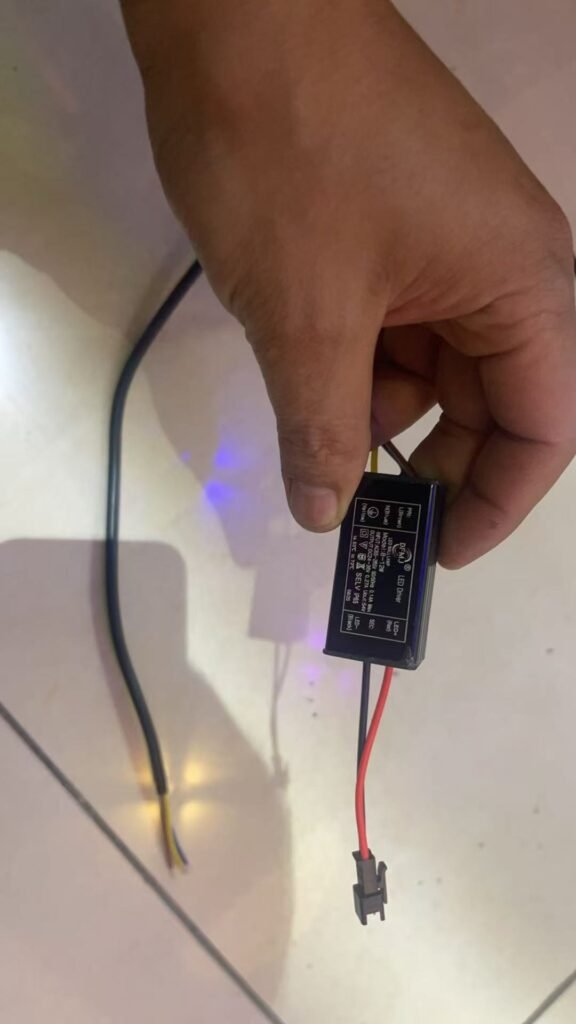
The driver and other electrical components also deserve attention.
When comparing suppliers, ask about:
- Driver manufacturer
- Input voltage
- Output characteristics
- Power factor
- Surge protection
- Operating temperature
- Warranty
- Driver replacement options
For projects in regions with unstable power conditions, high temperatures or demanding operating environments, these details can be particularly important.
A supplier should be able to clearly explain the electrical configuration of the product instead of only providing wattage and lumen information.
5. Check Surface Treatment and Corrosion Resistance
Outdoor lights are exposed to rain, humidity, sunlight and, in some locations, salt-laden air.
Surface treatment therefore matters.
Ask the supplier:
- What type of coating is used?
- What is the coating process?
- How is the surface prepared before coating?
- Is corrosion testing performed?
- Are stainless-steel screws or other suitable hardware available?
- Is the product intended for coastal environments?
For corrosion testing, ISO 9227:2022 specifies neutral salt spray, acetic acid salt spray and copper-accelerated acetic acid salt spray test methods. The standard also notes that salt spray testing can be used to assess corrosion protection and detect discontinuities in certain coatings. ISO
However, ISO also states that salt spray testing is not intended to predict long-term outdoor corrosion resistance or rank different materials simply by test duration. ISO
This is an important point for buyers.
Don’t simply ask:
“How many hours of salt spray testing?”
Ask what was tested, under which method, and how the result relates to the intended product and environment.
6. Check MOQ, Pricing and Lead Time
Price is obviously important in B2B purchasing.
But when evaluating an outdoor lighting supplier, price should be considered together with MOQ and production lead time.
Ask the supplier about:
- Sample price
- MOQ
- Price at different quantities
- Mixed-model orders
- Packaging
- Production lead time
- Sample lead time
- Spare parts
- Warranty terms
- Payment terms
For example, a supplier with a lower unit price may require a much higher MOQ.
Another supplier may offer a slightly higher unit price but allow mixed products or smaller trial orders.
For distributors testing a new product in a new market, this difference can be commercially important.
7. Check OEM and ODM Capability
If you plan to develop your own product range, check the supplier’s OEM/ODM capability before placing a large order.
Ask whether the supplier can support:
- Custom colors
- Logo
- Packaging
- Product specifications
- Cable length
- Installation accessories
- Different LED configurations
- Product modifications
- Custom product development
You should also ask about the development process.
For example:
Idea → Drawing → Sample → Testing → Confirmation → Mass Production
A supplier with a clear development process can make customized projects easier to manage.
For project buyers and distributors, OEM/ODM capability can also become important when creating products for a specific market.
8. Check Quality Control and Factory Production Capability
A catalogue can tell you what a supplier sells.
A factory visit can tell you much more about how the products are made.
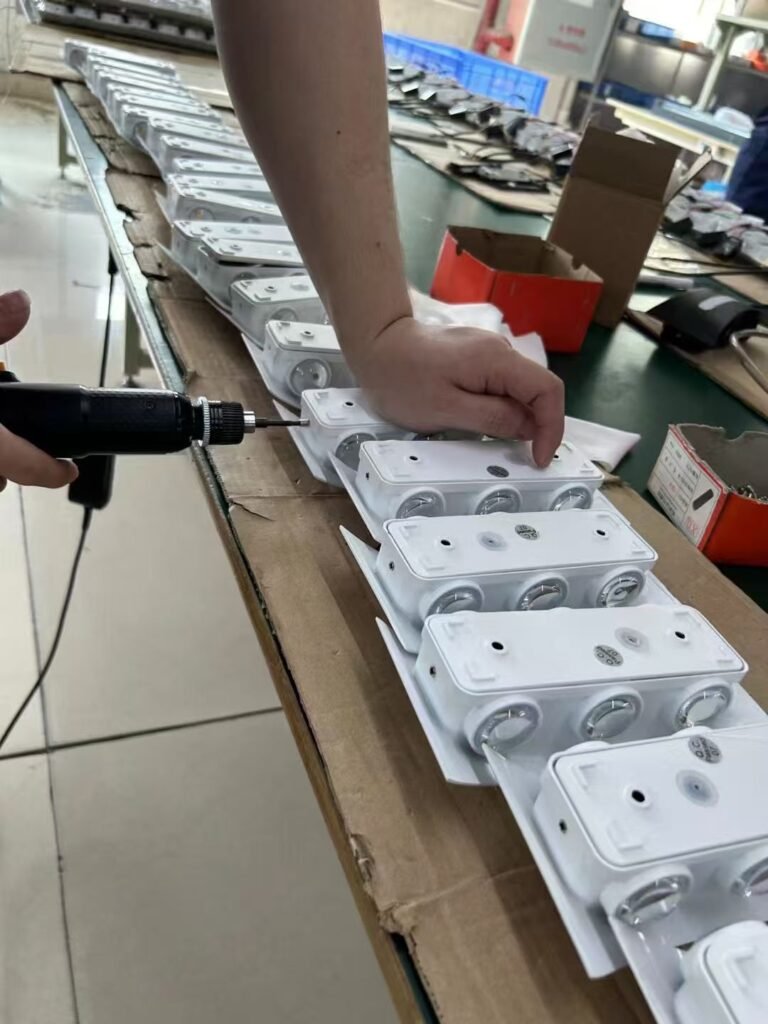
When evaluating an outdoor lighting supplier, ask about the quality-control process.
A useful production process may include checks such as:
Incoming Materials → Production → Assembly → Electrical Testing → Waterproof Testing → Aging/Inspection → Final QC → Packaging
Ask:
- Who performs quality inspections?
- Are incoming materials checked?
- Are finished products tested?
- Is waterproof testing performed?
- Are electrical parameters checked?
- Is there a final inspection before shipment?
- How are defective products handled?
If possible, visit the factory or showroom.
Seeing actual products and discussing production requirements directly can give you information that a catalogue cannot provide.
9. Ask for Samples Before a Large Order
The final step in understanding how to evaluate an outdoor lighting supplier is simple:
Order samples before committing to a large quantity.
A sample allows you to check the actual product rather than relying only on specifications.
You can evaluate:
- Appearance
- Material
- Surface finish
- Light effect
- Installation
- Wiring
- Waterproof construction
- Packaging
- Product dimensions
- Overall workmanship
For distributors, it can also be useful to install the sample in a real environment.
For project buyers, test the product under conditions similar to the final application whenever possible.
If the supplier passes the sample stage, the next step is to confirm whether the same specification can be maintained during mass production.
DFMJ Expert Insight: Don’t Compare Suppliers by Unit Price Alone
One of the most common mistakes in B2B outdoor lighting sourcing is comparing suppliers only by price.
I recommend comparing suppliers using a simple table.
| Item | Supplier A | Supplier B | Supplier C |
|---|---|---|---|
| Product specification | |||
| Housing material | |||
| IP rating | |||
| LED driver | |||
| Surface treatment | |||
| MOQ | |||
| Lead time | |||
| Warranty | |||
| OEM/ODM | |||
| Quality control |
This makes the comparison more objective.
For example, a quotation of $10 and a quotation of $12 may not represent the same product if the materials, driver, IP protection, packaging or warranty are different.
Compare like with like before comparing price.
Real Project Tip: Prepare Your Supplier Checklist Before Contacting Factories
If you are currently looking for an outdoor lighting supplier, prepare your requirements before requesting quotations.
I recommend having these details ready:
- Target product
- Quantity
- Target market
- Required IP rating
- Housing material
- Color
- LED power
- Color temperature
- Driver requirements
- Certification requirements
- Packaging requirements
- Target price
- Expected delivery date
This allows suppliers to give you more useful quotations.
It also makes it easier to compare different suppliers using the same requirements.
What Should B2B Buyers Ask an Outdoor Lighting Supplier?
Before placing an order, you can use these questions:
Product
- What material is the housing?
- What is the IP rating?
- What LED and driver are used?
- What color temperatures are available?
- Can you provide samples?
Quality
- What tests do you perform?
- Do you perform waterproof testing?
- Do you perform aging or electrical testing?
- Is corrosion testing available?
Commercial
- What is the MOQ?
- What is the sample lead time?
- What is the mass-production lead time?
- What is the warranty?
- Can different models be mixed in one order?
Customization
- Do you support OEM?
- Do you support ODM?
- Can you customize colors and packaging?
- Can you modify product specifications?
Factory
- Where is the factory located?
- Can buyers visit the factory?
- What products do you manufacture directly?
- Can you support repeat orders?
Why a Factory Visit Can Be Useful
For buyers sourcing from China, a factory visit can provide another level of information.
You can see:
- Actual products
- Production facilities
- Sample rooms
- Quality-control procedures
- Packaging
- Product development capability
You can also discuss your requirements face-to-face.
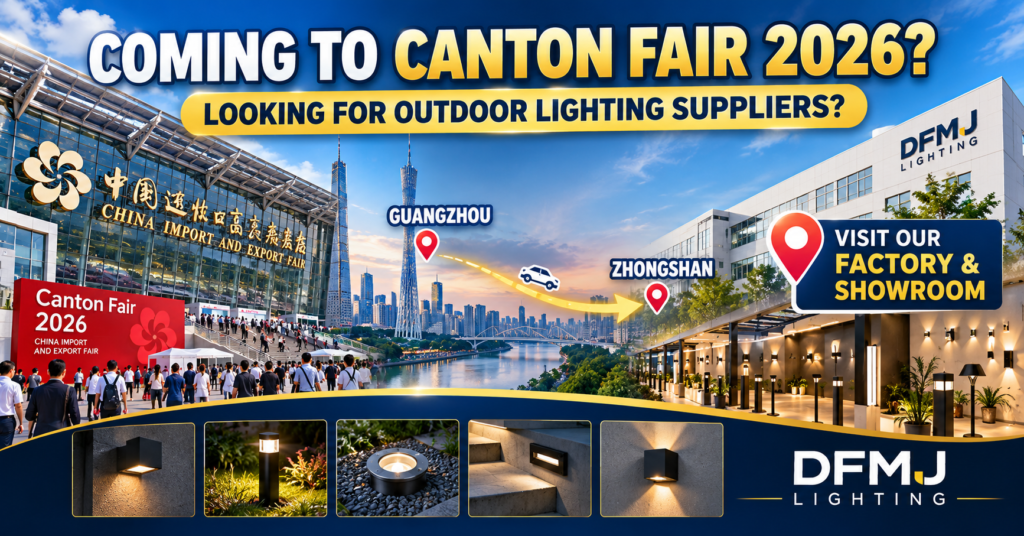
If you are already planning a sourcing trip to Guangzhou or Zhongshan, arranging factory visits can be a practical way to compare suppliers.
This is particularly useful when you are looking for new products, a backup supplier or a factory for long-term cooperation.
About DFMJ Lighting
DFMJ Lighting is an outdoor lighting supplier based in Zhongshan, Guangdong, China.
Our product range includes:
- Outdoor Wall Lights
- Garden Lights
- Landscape Lighting
- Bollard Lights
- Outdoor Step Lights
- Outdoor Inground Lights
We work with international B2B buyers including distributors, wholesalers, contractors and project buyers.
Our focus is outdoor lighting for projects and wholesale applications, with support for OEM/ODM requirements.
When evaluating an outdoor lighting supplier, we believe buyers should look beyond the catalogue and quotation.
Product specifications, material selection, testing, production capability and communication all matter when building a long-term supplier relationship.
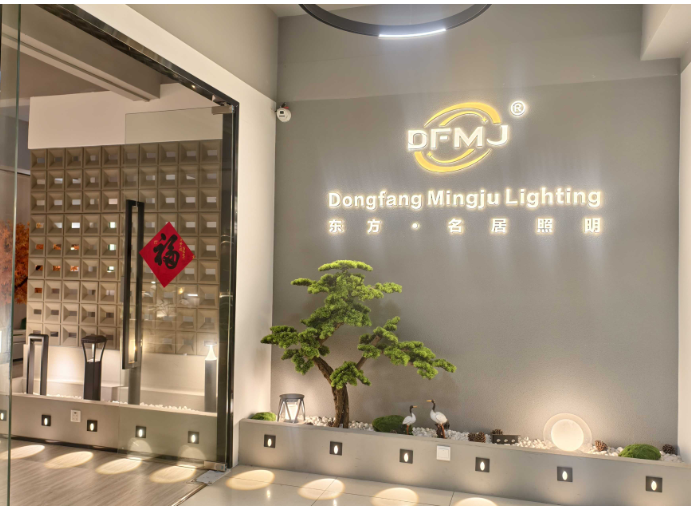
Planning a China Sourcing Trip?
If you are planning to visit China to source outdoor lighting, prepare your supplier checklist before the trip.
Bring your current product list, target specifications and price requirements.
If you are visiting Guangzhou for the Canton Fair in October, you can also consider arranging additional factory visits in Zhongshan.
For buyers looking for new products, comparing suppliers or developing a new outdoor lighting range, a direct factory meeting can be a useful part of the sourcing process.
FAQ
How do I evaluate an outdoor lighting supplier?
Start by checking the supplier’s product range, materials, IP rating, electrical components, surface treatment, testing, MOQ, lead time, OEM/ODM capability and production quality. Samples should be evaluated before a large order.
What should I ask an outdoor lighting supplier?
Ask about product specifications, housing material, IP rating, LED driver, testing, MOQ, lead time, warranty, packaging and customization capability.
Should I choose an outdoor lighting supplier based on price?
Price is important, but it should not be the only factor. Compare the same product specifications, materials, components, testing requirements, MOQ, warranty and delivery terms before comparing quotations.
Should I visit an outdoor lighting factory?
A factory visit can help buyers understand the supplier’s products, production capability, quality-control process and communication. It can be particularly useful before establishing a long-term B2B relationship.
What IP rating should outdoor lighting have?
The appropriate IP rating depends on the product design, installation location and environmental conditions. Buyers should confirm the actual tested rating and application requirements rather than choosing an IP rating based only on a catalogue claim. IEC 60529 is the standard covering the classification of IP protection for enclosures. IEC Webstore
Can outdoor lighting suppliers provide OEM and ODM?
Many suppliers provide OEM/ODM services, but capabilities vary. Ask specifically about product modification, custom colors, packaging, specifications, samples and development procedures.
Final Outdoor Lighting Supplier Checklist
Before placing an order, make sure you have checked:
- Product specifications
- Housing material
- LED and driver
- IP rating
- Waterproof testing
- Surface treatment
- Corrosion considerations
- MOQ
- Sample
- Lead time
- Warranty
- OEM/ODM capability
- Quality-control process
- Packaging
- Mass-production consistency
The right supplier is not simply the company offering the lowest price.
For B2B outdoor lighting, the better question is:
Can this supplier consistently deliver the product specifications, quality and service my market requires?
That is the question worth answering before placing a large order.
Outdoor Lighting Supplier in China →
Why Do Cheap Outdoor Lights Fail Early? →
Die-Cast Aluminum vs Plastic Outdoor Lights →
IP65 vs IP66 vs IP67 →