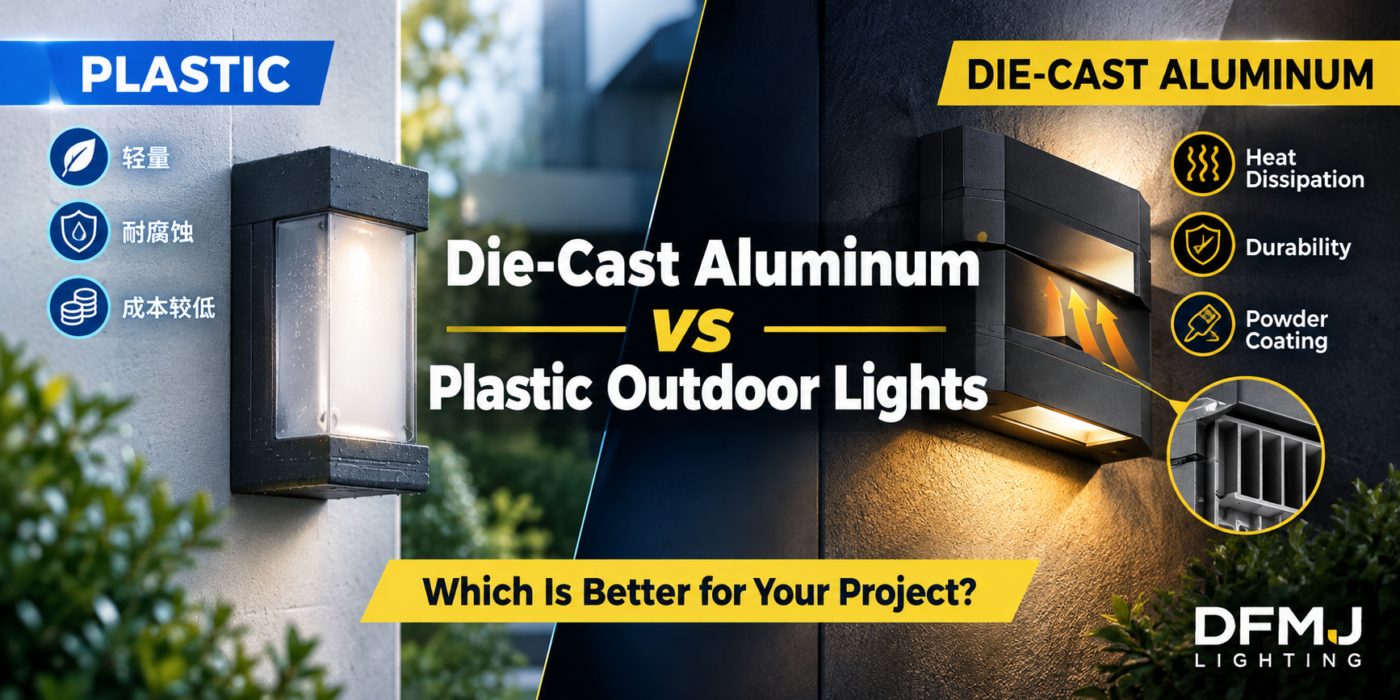
die cast aluminum vs plastic outdoor lights comparison

Die Cast Aluminum vs Plastic Outdoor Lights: 7 Key Differences and Benefits

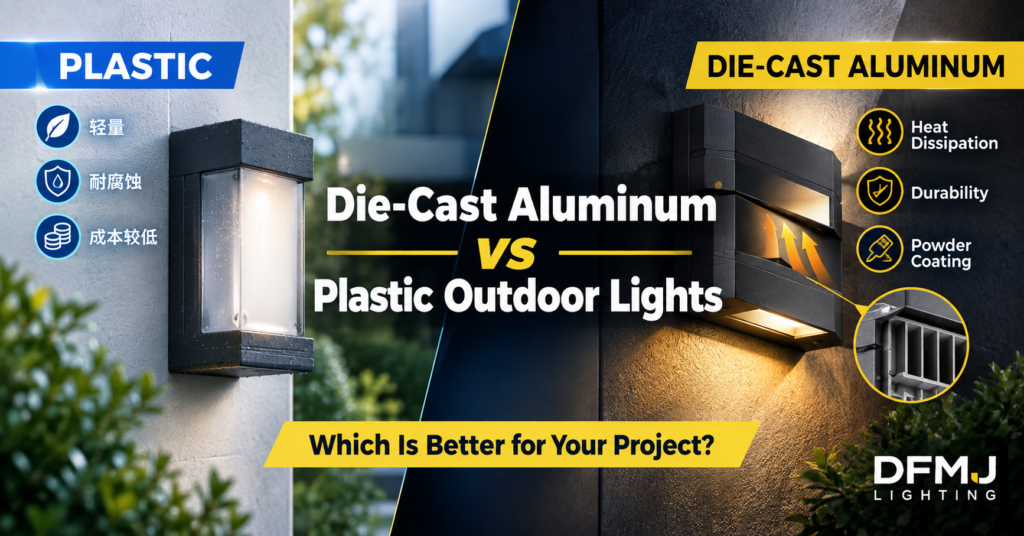
When buying outdoor lighting for a project, one question often comes up: die cast aluminum vs plastic outdoor lights — which is better?

The housing material affects much more than appearance. It can influence heat dissipation, durability, weight, corrosion resistance, finishing, cost and long-term performance.

For B2B buyers, wholesalers, contractors, hotels and project developers, choosing between aluminum and plastic should start with the application rather than the lowest unit price.

So, die cast aluminum vs plastic outdoor lights: which material should you choose?

The answer depends on the project, but die-cast aluminum has several important advantages for many architectural and commercial outdoor lighting applications.
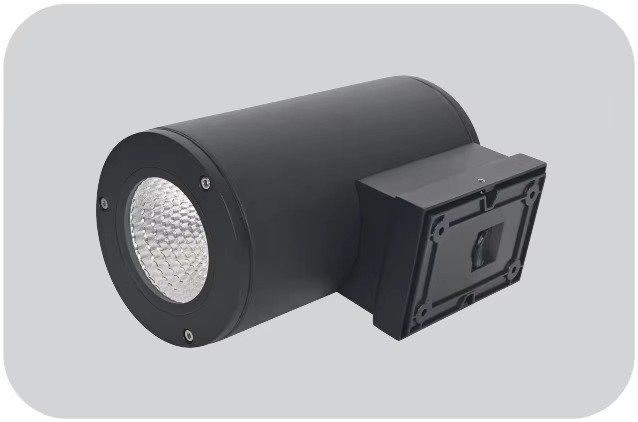
die cast aluminum vs plastic outdoor lights comparison

Die Cast Aluminum vs Plastic Outdoor Lights: What Is the Difference?

The housing protects the LED, driver, wiring and other internal components from the outdoor environment.

Plastic outdoor lights may use materials such as polycarbonate or other engineering plastics. Die-cast aluminum outdoor lights are manufactured by injecting molten aluminum into a mold under pressure to create a rigid housing.

Neither material is automatically suitable for every application.

The key is to understand how each material performs in the environment where the fixture will be installed.


1. Heat Dissipation

Heat management is one of the biggest differences in die cast aluminum vs plastic outdoor lights.

LEDs and drivers generate heat during operation. If heat cannot escape efficiently, high operating temperatures can affect electronic components and long-term reliability.

Aluminum has much better thermal conductivity than most plastics.

A die-cast aluminum housing can therefore help transfer heat away from the internal components.

Plastic has lower thermal conductivity, so thermal management needs to be considered carefully in the fixture design.

For higher-power outdoor wall lights or fixtures that operate for long periods, this difference can become important.

Buying tip: Don’t only ask about wattage. Ask how the fixture manages heat.
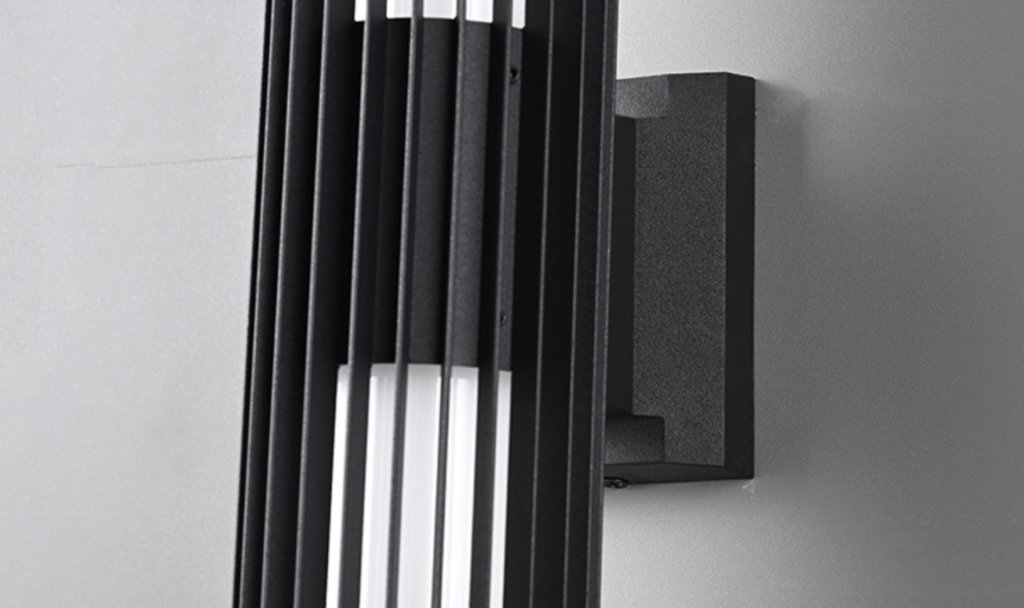
die cast aluminum vs plastic outdoor lights comparison

2. Durability and Mechanical Strength

Outdoor lights can face rain, wind, temperature changes, installation impact and accidental damage.

In the die cast aluminum vs plastic outdoor lights comparison, aluminum generally provides a more rigid housing.

This makes die-cast aluminum a practical choice for many commercial, architectural and outdoor wall lighting applications.

Plastic can also be highly durable when the manufacturer uses the correct engineering-grade material. However, different plastics have different resistance to UV exposure, impact and temperature.

For this reason, buyers should ask what type of plastic is being used rather than simply choosing “plastic.”


3. Weight: Plastic Has an Advantage

One clear benefit of plastic is its lower weight.

Plastic outdoor lights can be useful when:

  • Shipping weight needs to be minimized
  • Fixtures are installed on lightweight structures
  • Installation needs to be particularly easy
  • Large quantities need to be transported

Die-cast aluminum is heavier, but that additional weight also comes with greater rigidity and a more substantial housing.

So in die cast aluminum vs plastic outdoor lights, neither material wins every category.

Plastic is lighter. Aluminum is generally more rigid.


4. Corrosion Resistance

Corrosion is one area where the comparison needs more explanation.

Plastic does not corrode like metal.

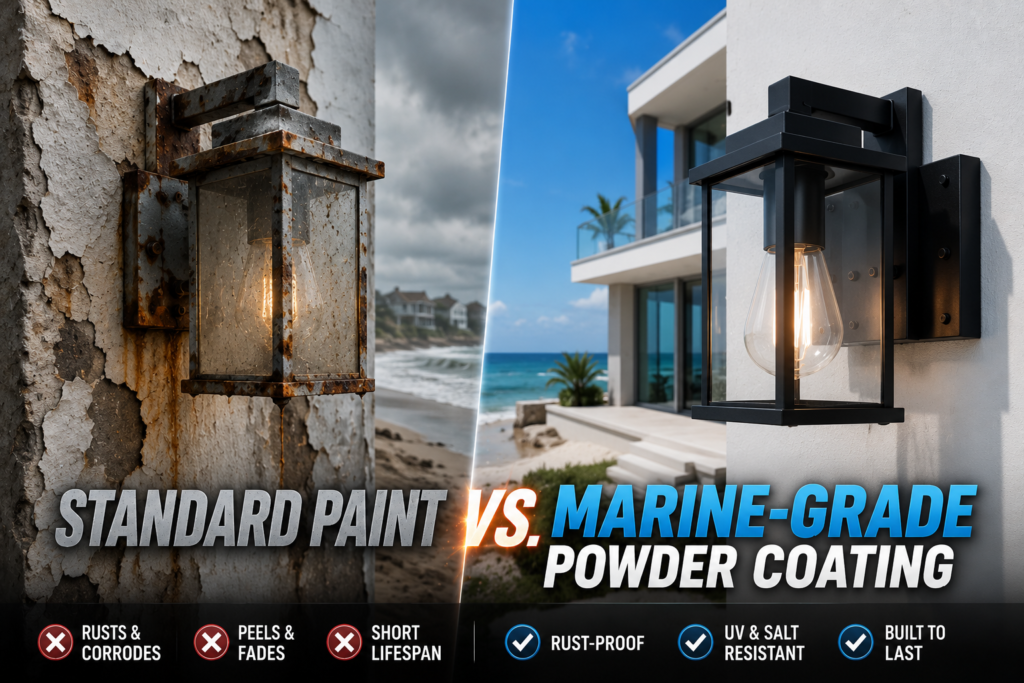
Aluminum can corrode when exposed to moisture, salt and aggressive outdoor environments, particularly if the protective coating is damaged.

However, properly designed aluminum outdoor lights can use surface treatment and powder coating to provide an effective protective barrier.

For coastal projects, buyers should evaluate:

  • Aluminum alloy and housing design
  • Surface preparation
  • Powder coating
  • Stainless steel hardware
  • Sealing
  • Installation environment

This is why die cast aluminum vs plastic outdoor lights should never be reduced to “metal versus plastic.”

The complete construction matters.


5. Finishing and Appearance

For architectural outdoor lighting, appearance is part of the specification.

Die-cast aluminum provides a strong surface for different powder-coated finishes.

Common options include:

  • Black
  • Dark gray
  • White
  • Textured finishes
  • Custom RAL colors

This makes aluminum particularly suitable for outdoor wall lights used on modern buildings, villas, hotels and commercial properties.

Plastic can also be produced in different colors and textures, but the visual and tactile result can be different.

For projects where the fixture needs to look substantial and architectural, aluminum is often preferred.


6. Cost: Plastic Is Not Always the Cheaper Long-Term Choice

Plastic outdoor lights can have a lower material and production cost in some applications.

Die-cast aluminum generally requires:

  • Metal molds
  • Die-casting
  • Surface treatment
  • Powder coating
  • More manufacturing processes

So the initial price can be higher.

But B2B buyers should look beyond the unit price.

Consider:

Purchase price → installation → maintenance → replacement → expected service life

A cheaper fixture that requires frequent replacement may not be the cheaper solution for a hotel, commercial property or large landscape project.

The best material is the one that provides the right balance between cost and required performance.


7. Outdoor Application Should Decide the Material

There is no universal winner in the die cast aluminum vs plastic outdoor lights comparison.

A practical way to think about it is:

RequirementDie-Cast AluminumPlastic
Heat dissipationExcellentLower
Structural rigidityHighDepends on material
WeightHeavierLighter
CorrosionRequires protectionNaturally corrosion-resistant
Finishing optionsExcellentDepends on material
Initial costOften higherOften lower
Architectural appearanceStrongDepends on design
Thermal managementStrong advantageRequires careful design

For a simple low-power application, plastic may be completely suitable.

For architectural wall lighting, commercial projects or fixtures with greater thermal requirements, die-cast aluminum can be a more appropriate choice.
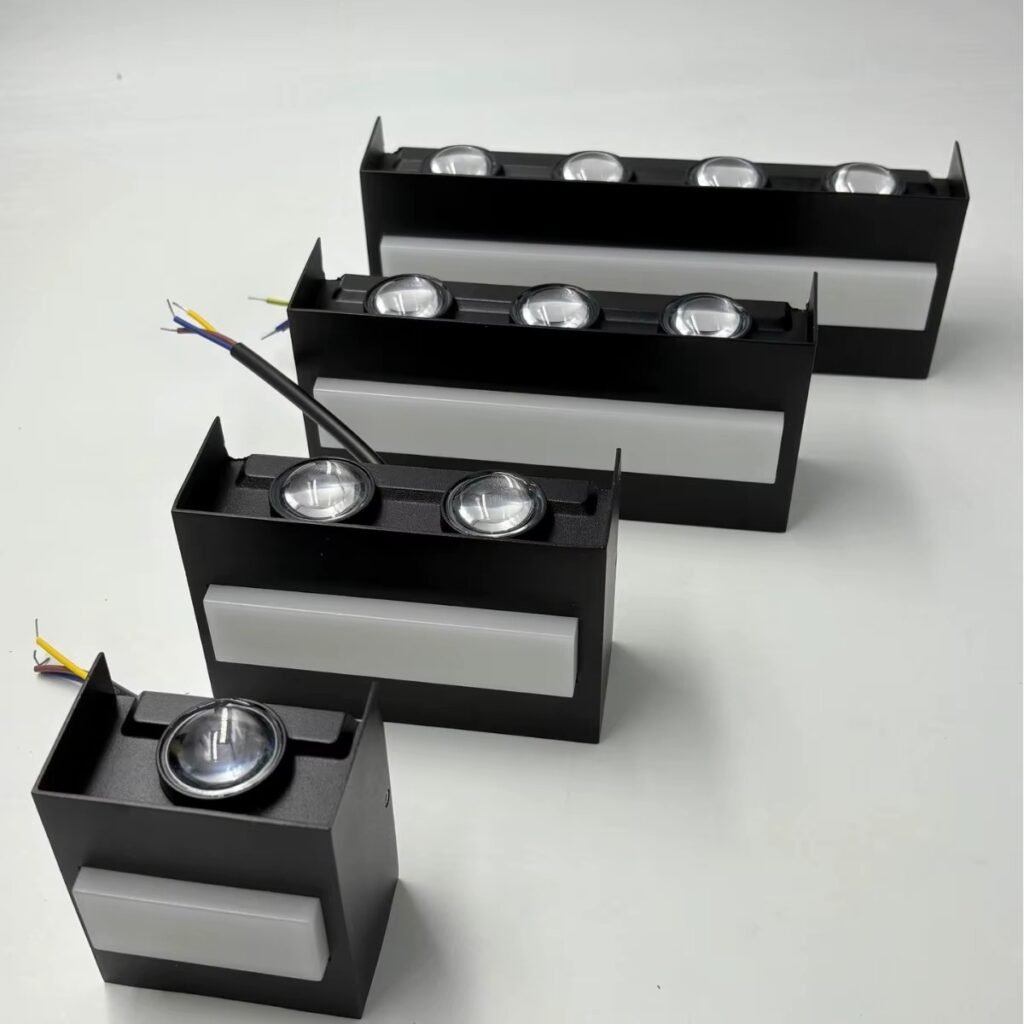
die cast aluminum vs plastic outdoor lights comparison

DFMJ Expert Insight: Don’t Compare Materials Without Comparing the Whole Fixture

At DFMJ Lighting, we don’t evaluate an outdoor light simply by asking whether its housing is aluminum or plastic.

We look at the whole construction.

For a die-cast aluminum outdoor wall light, for example, we consider:

  1. Housing design
  2. Heat dissipation
  3. LED and driver configuration
  4. Surface preparation
  5. Powder coating
  6. Sealing and waterproof construction
  7. Hardware and assembly
  8. Actual installation environment

This is important because a good material cannot compensate for poor product design.

A well-designed plastic fixture can outperform a poorly designed aluminum fixture.

Our position is therefore simple:

Material is the starting point, not the final quality judgment.


Real Project Tip: Tell Your Supplier the Application First

When requesting an outdoor lighting quotation, don’t only send the product photo and quantity.

Give the manufacturer the application.

For example:

“We need 300 outdoor wall lights for a modern apartment project.”

or:

“We need 500 outdoor wall lights for a coastal hotel.”

These two projects may require different considerations.

The supplier should then evaluate:

Environment → Power → Material → Thermal management → Coating → Waterproofing → Testing

This can help avoid choosing a fixture based only on the lowest quotation.


Why DFMJ Uses Die-Cast Aluminum for Many Outdoor Wall Lights

Many of our DFMJ outdoor wall lights use die-cast aluminum housing because it provides a useful combination of structural strength, thermal management and finishing flexibility.

For B2B buyers looking for architectural outdoor lighting, you can explore our DFMJ outdoor lighting solutions and discuss the appropriate housing and specification for your application.

The goal is not to make every outdoor light from the same material.

The goal is to select the right construction for the right environment.
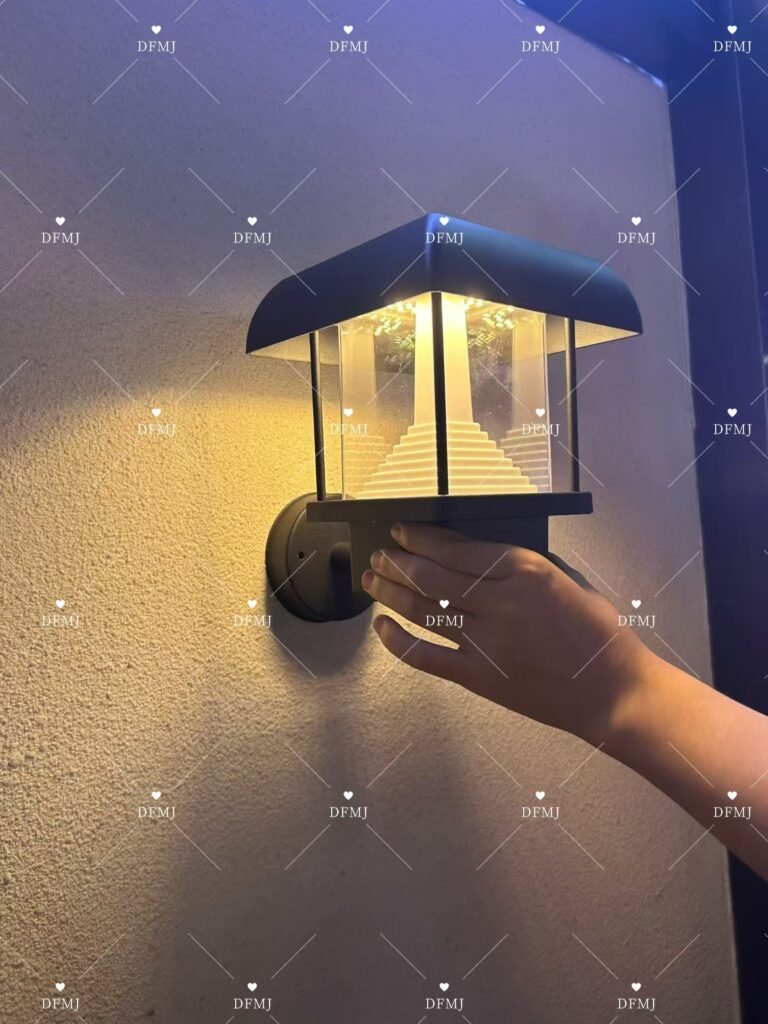
DFMJ Lighting outdoor LED wall light warm white

FAQ

Is die-cast aluminum better than plastic for outdoor lights?

Not always. Die-cast aluminum offers advantages in heat dissipation, rigidity and finishing, while plastic is lighter and naturally resistant to metal corrosion. The best material depends on the application.

Do plastic outdoor lights last longer than aluminum lights?

Not necessarily. Service life depends on material quality, UV resistance, thermal management, electronics, waterproofing and overall product design.

Does die-cast aluminum rust?

Aluminum does not rust like iron or steel, but it can corrode. Proper surface treatment and powder coating can help protect aluminum outdoor lighting from environmental exposure.

Are die-cast aluminum outdoor lights more expensive?

They can have a higher initial manufacturing cost than some plastic fixtures. However, B2B buyers should also consider maintenance, replacement and expected performance rather than comparing unit price alone.

Which material is better for outdoor wall lights?

For many architectural and commercial outdoor wall lights, die-cast aluminum is a strong option because of its rigidity, heat dissipation and finishing possibilities. The final specification should still match the project environment.


About DFMJ Lighting

DFMJ Lighting is a China-based outdoor lighting manufacturer serving wholesalers, distributors, contractors and project buyers.

Our product range includes outdoor wall lights, garden lights, bollard lights, step lights, inground lights and other outdoor lighting solutions.

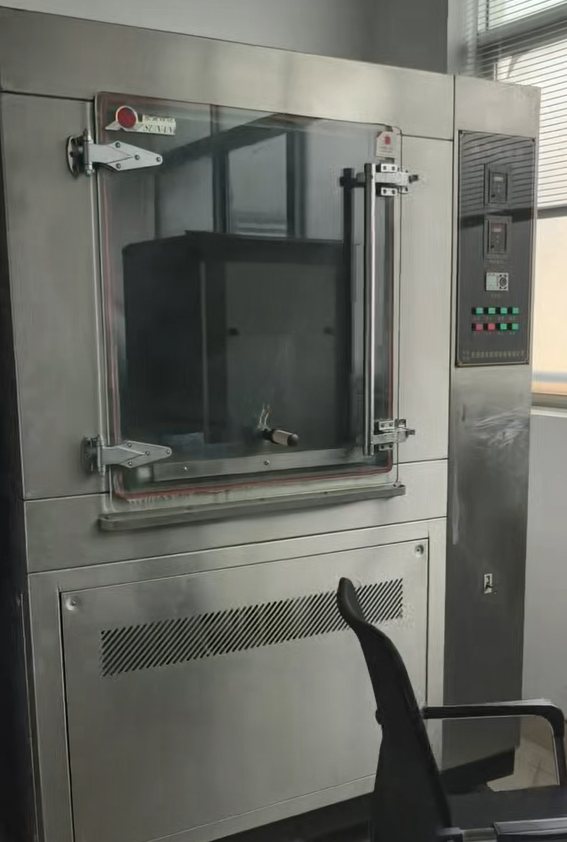
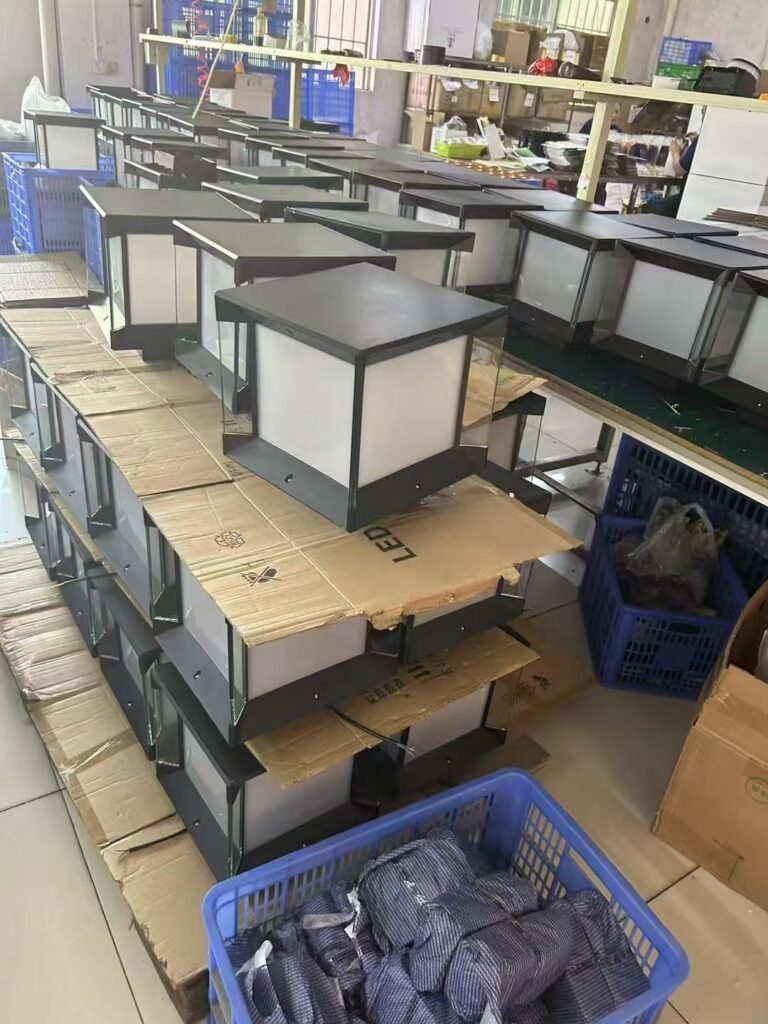
With more than 16 years of manufacturing experience, DFMJ focuses on product construction, material selection, waterproof protection, aging testing and final quality inspection.

For B2B buyers, we can support standard products as well as OEM/ODM outdoor lighting projects.
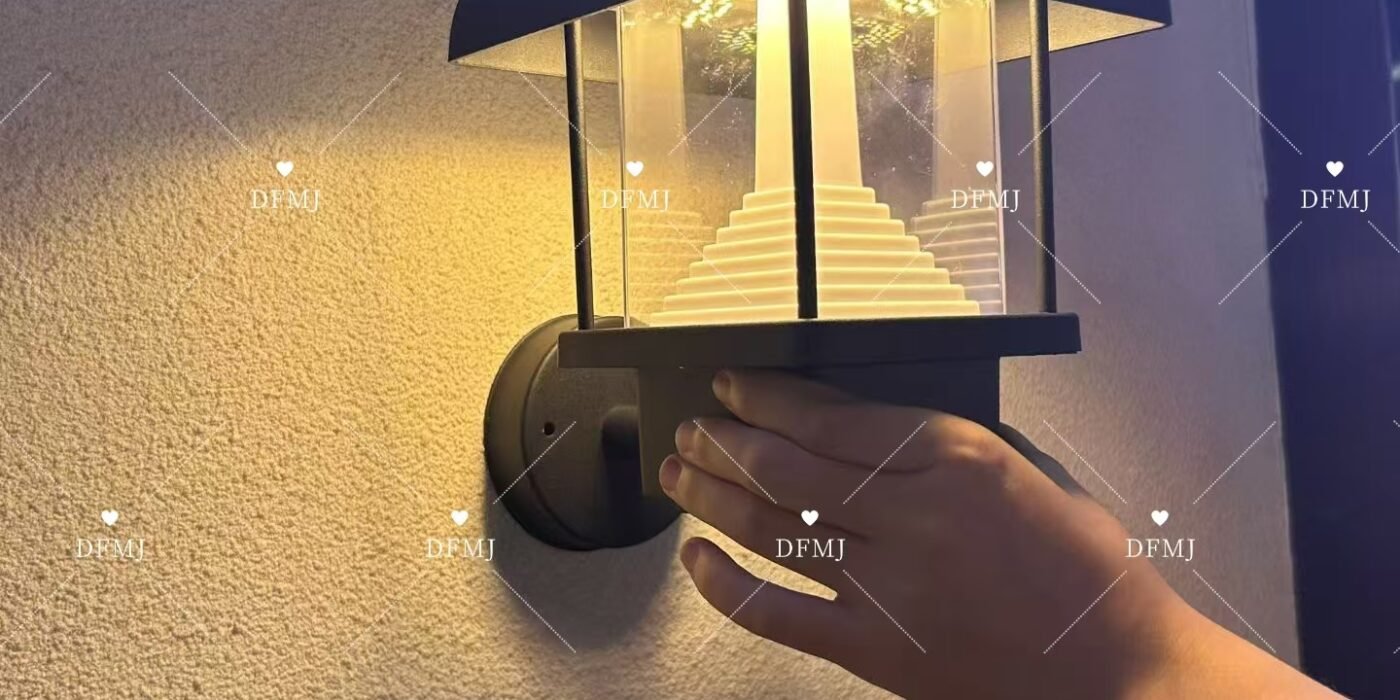
DFMJ Lighting outdoor fixture tested at night for brightness and glare

Need Outdoor Wall Lights for Your Project?

Choosing between aluminum and plastic should start with the application, not just the price.

Tell us your:

  • Project type
  • Installation environment
  • Quantity
  • Required wattage
  • Material preference
  • IP rating
  • Finish/color

DFMJ Lighting can help you evaluate the right outdoor wall light construction for your project.
Explore DFMJ Outdoor Lighting


Related Articles

why do bollard lights rust in coastal outdoor lighting projects

Why Do Bollard Lights Rust? 7 Causes, Materials & Prevention Tips

If you are asking why do bollard lights rust, the answer is usually more complicated than simply “the metal is poor quality.”

Outdoor bollard lights are exposed to rain, humidity, irrigation, UV radiation, temperature changes, dirt, and, in coastal areas, salt-laden air. Over time, these conditions can damage the protective finish and cause corrosion around the housing, screws, joints, mounting points, or other metal components.

For wholesalers, distributors, contractors, hotels, resorts, and landscape project buyers, corrosion is more than an appearance problem. It can lead to customer complaints, replacement costs, maintenance work, and shortened product life.

The good news is that material selection, surface treatment, hardware, product construction, and environmental testing can significantly reduce the risk.

why do bollard lights rust in coastal outdoor lighting projects

Why Do Bollard Lights Rust in Outdoor Projects?

The first point to understand is that not every type of corrosion is technically “rust.”

Traditional rust is associated with iron and steel. Aluminum does not rust in the same way as steel, but it can corrode, especially when exposed to salt, moisture, damaged coatings, or incompatible metals.

On aluminum outdoor lighting, corrosion may appear as:

  • White or gray powder
  • Bubbling or peeling coating
  • Surface pitting
  • Discoloration around screws
  • Corrosion around joints or mounting points

Steel components can develop the familiar reddish-brown rust.

So when a customer asks why do bollard lights rust, the better question is:

What material is corroding, where is the protective barrier failing, and what environmental conditions are accelerating the process?

why do bollard lights rust in coastal outdoor lighting projects


1. Coastal Salt Air Can Accelerate Corrosion

Coastal projects are among the most demanding environments for outdoor lighting.

Salt from seawater can settle on the fixture surface. When combined with moisture, it creates a more aggressive environment for exposed metal and protective coatings.

This is particularly important for:

  • Coastal hotels
  • Beach resorts
  • Waterfront villas
  • Seaside restaurants
  • Landscape projects near the ocean
  • Outdoor projects in humid climates

Salt can accumulate around screws, joints, mounting bases, and damaged coating areas.

For this reason, a bollard light that performs well in an inland residential garden may require different material and corrosion protection when specified for a beachfront resort.


2. Poor-Quality Surface Treatment Can Lead to Early Corrosion

The metal housing is only one part of the corrosion-resistance system.

A properly engineered aluminum housing can still experience problems if the surface preparation and coating process are inadequate.

Powder coating is widely used for outdoor lighting because it creates a protective finish over the metal surface.

However, powder coating is not a guarantee that a fixture can survive every environment.

Problems can occur when:

  • The coating is too thin or inconsistent
  • Surface preparation is inadequate
  • Edges and corners are poorly treated
  • The coating is damaged during transportation
  • Installation scratches expose the substrate
  • Water or salt becomes trapped around damaged areas

This is why B2B buyers should ask not only “Is it powder coated?”, but also how the surface is prepared, controlled, and tested.


3. Die-Cast Aluminum Is Corrosion-Resistant — But Not Corrosion-Proof

Die-cast aluminum is commonly used for outdoor lighting because it offers a useful combination of strength, manufacturability, heat dissipation, and relatively low weight.

But aluminum should not be described as completely corrosion-proof.

Under normal conditions, aluminum naturally develops a protective oxide layer. However, aggressive environments such as salt exposure can cause localized corrosion, including pitting, particularly when the protective finish is damaged.

This means the real question is not:

“Is aluminum good or bad?”

The better question is:

What aluminum construction, surface treatment, hardware and environmental conditions are involved?

For many outdoor lighting applications, properly engineered die-cast aluminum with a suitable outdoor coating can be a practical solution.

why do bollard lights rust in coastal outdoor lighting projects

4. Stainless Steel Hardware Can Still Corrode

A common mistake is to focus on the main housing while ignoring the smaller metal components.

Bollard lights may contain:

  • Screws
  • Brackets
  • Mounting plates
  • Washers
  • Fasteners
  • Internal metal components

These parts can become the first visible corrosion points.

Material compatibility also matters. When different metals are placed together in the presence of moisture or salt, galvanic corrosion can become a concern.

For demanding coastal applications, buyers should ask the supplier what type of stainless steel or other hardware is being used rather than simply accepting the phrase “stainless steel.”

For example, 316 stainless steel is generally more suitable for salt-air environments than standard 304 stainless steel, although the complete fixture design still matters.


5. Installation Damage Can Create the Starting Point

Sometimes the product is not the original problem.

A good coating can be damaged during:

  • Transportation
  • Installation
  • Drilling
  • Tightening screws
  • Cutting or modifying components
  • Contact with tools
  • Incorrect handling

Once the protective coating is damaged, the exposed metal can become a vulnerable point.

This is especially important around the bottom section of bollard lights, mounting hardware, screw holes, and joints.

For landscape projects, the base of the fixture may also be exposed to soil, irrigation water, fertilizers, mud, and standing moisture.

That is why installation quality should be considered part of outdoor lighting reliability.


6. Why Do Bollard Lights Rust Faster in Humid or Coastal Climates?

The environment can dramatically change the expected performance of the same product.

A bollard light installed in a relatively dry inland garden may experience very different conditions from one installed at a beachfront hotel.

Consider these project environments:

EnvironmentMain Risk
Inland residential gardenRain, humidity, UV
Tropical landscapeHigh humidity, heavy rain, heat
Hotel/resortIrrigation, cleaning chemicals, humidity
Coastal projectSalt air + moisture
Waterfront landscapeSalt exposure + standing moisture
Poolside areaHumidity, chemicals, water exposure

This is why outdoor lighting should be selected according to the actual project environment, not only the product appearance or price.


7. Salt Spray Testing Helps Evaluate Corrosion Protection

For B2B outdoor lighting buyers, salt spray testing can provide useful information about coating and corrosion resistance.

ISO 9227 specifies laboratory salt spray methods, including neutral salt spray (NSS), for evaluating the corrosion resistance of metallic materials and protective coatings. The standard also notes that salt spray testing is useful for detecting discontinuities and defects in certain coatings.

For salt-laden environments, cyclic salt mist testing is another established testing approach under IEC 60068-2-52.

However, there is an important point for buyers:

A salt spray test result should not be treated as a direct prediction of how many years a fixture will last outdoors.

ISO specifically notes that salt spray methods are not intended to rank materials against each other or directly predict long-term outdoor corrosion resistance.

Therefore, a professional supplier should look at the complete product construction and project environment, rather than using one test number as the entire quality story.

why do bollard lights rust in coastal outdoor lighting projects

DFMJ Expert Insight: Corrosion Resistance Is a System

At DFMJ Lighting, we do not look at corrosion resistance as simply a material-selection problem.

Our view is:

A durable bollard light needs the right material, surface treatment, hardware, sealing, assembly and application.

For a normal outdoor landscape project, properly engineered die-cast aluminum + outdoor powder coating can be a practical combination.

For more demanding environments, especially coastal projects, we would pay closer attention to:

  1. Housing material and coating system
  2. Stainless steel hardware and metal compatibility
  3. Coating integrity around screws, joints and edges
  4. Waterproof construction and drainage
  5. Actual environmental exposure
  6. Corrosion and salt-mist testing requirements

This approach is more useful than simply asking whether a product is “rust-proof.”


Real Project Tip: Tell Your Supplier Where the Bollard Lights Will Be Installed

One of the most useful pieces of information a B2B buyer can provide is the project environment.

Instead of sending:

“Please quote 500 bollard lights.”

Give the supplier more information:

“500 bollard lights for a coastal hotel project. High humidity, salt-air exposure, outdoor landscape installation.”

That changes the product discussion.

The supplier can then evaluate whether the standard configuration is appropriate or whether the project requires different coating, hardware, material, sealing, or testing requirements.

Do not wait until the lights start corroding to tell the manufacturer that the project is beside the sea.


Choosing Bollard Lights for Different Outdoor Projects

For general landscape and pathway applications, you can explore DFMJ Lighting’s range of outdoor lighting solutions, including garden lights, bollard lights, step lights and other exterior lighting products.

For projects where water exposure is also a major concern, our guide on Outdoor Lights Get Water Inside explains why housing design, cable entry, gaskets and installation conditions all matter.

If your project requires fixtures installed close to or below ground level, see the DFMJ Outdoor Inground Lights collection and evaluate the product according to the actual drainage and water conditions.

For broader purchasing considerations, you can also read our guide to Outside Lights for Sale.


FAQ: Why Do Bollard Lights Rust?

Why do bollard lights rust near the ocean?

Salt-laden air combined with moisture creates a more aggressive corrosion environment. Salt deposits can accumulate on metal surfaces, coatings and hardware, increasing corrosion risk.

Does die-cast aluminum rust?

Aluminum does not rust like iron or steel, but it can corrode. In harsh environments, aluminum may develop white oxidation, pitting, coating bubbles or other forms of surface deterioration.

Is powder coating enough to prevent bollard lights from rusting?

Powder coating provides an important protective barrier, but it is not an unlimited guarantee. Surface preparation, coating quality, thickness, installation damage, hardware and environmental exposure all matter.

Is stainless steel better for coastal bollard lights?

Certain stainless-steel grades, particularly 316, can provide better resistance to salt-air environments than 304. However, hardware should be evaluated together with the housing, coating and overall fixture design.

What should I ask a manufacturer before buying bollard lights for a coastal project?

Ask about the housing material, coating system, stainless-steel grade, salt spray or corrosion testing, waterproof rating, cable entry, gasket design, and whether the product has been used successfully in similar environments.

Can salt spray testing guarantee long-term outdoor performance?

No. Salt spray testing is useful for evaluating corrosion protection under standardized laboratory conditions, but it should not be interpreted as a direct prediction of real-world service life.


About DFMJ Lighting

DFMJ Lighting is a China-based outdoor lighting manufacturer serving wholesalers, distributors, contractors, and project buyers.

Our outdoor lighting range includes outdoor wall lights, garden lights, bollard lights, step lights, inground lights, façade lighting and other exterior lighting solutions.

With more than 16 years of manufacturing experience, DFMJ Lighting focuses on practical product construction, material selection, waterproof protection and quality control. Our factory performs waterproof testing, aging tests and final inspections as part of its quality-control process.

For B2B buyers, our goal is not simply to supply a fixture at a competitive price.

We aim to help customers select outdoor lighting that matches the application, environment, material requirements and expected performance of the project.

DFMJ Lighting outdoor LED wall light warm white

Need Bollard Lights for a Coastal or Landscape Project?

If you are sourcing bollard lights for a hotel, resort, coastal property, landscape project or humid climate, do not evaluate the product only by price or appearance.

Tell us your:

  • Project location
  • Installation environment
  • Quantity
  • Required material
  • Finish/color
  • IP rating
  • Corrosion-resistance requirements

The DFMJ Lighting team can help you evaluate suitable outdoor lighting options for your project.

Contact DFMJ Lighting for product recommendations, samples, OEM/ODM solutions and wholesale quotations.


Related Articles

Add to cart